Good packing comes down to a short list of habits build outfits around two colors, roll your clothes, sort them into cubes, move your documents onto your phone, and tuck a foldable spare bag into the case for whatever the trip throws at you. That’s the whole system. Everything below is detail.
And honestly, most of it would have worked twenty years ago. Clothes haven’t changed. What has changed is the paperwork, the electronics, and how little patience any of us have left for dragging an overweight suitcase up a metro staircase.
Start With the Clothes
The weight of your bag gets decided at the closet, not the suitcase. Pick a two-color palette first, black and navy, say, or beige and white, and refuse anything that sits outside it. It’s a capsule wardrobe scaled down to a single trip. Five tops and three bottoms in a shared palette produce fifteen outfits, and one layer that goes over all of them dresses you for two weeks out of a carry-on.
Shoes are where good intentions die. Two pairs, one for walking and one for dinner, and that’s it. The third pair rides along the whole trip without ever leaving the bag. Everyone who packs it knows this, and packs it anyway.
Wear the Heavy Stuff Onto the Plane
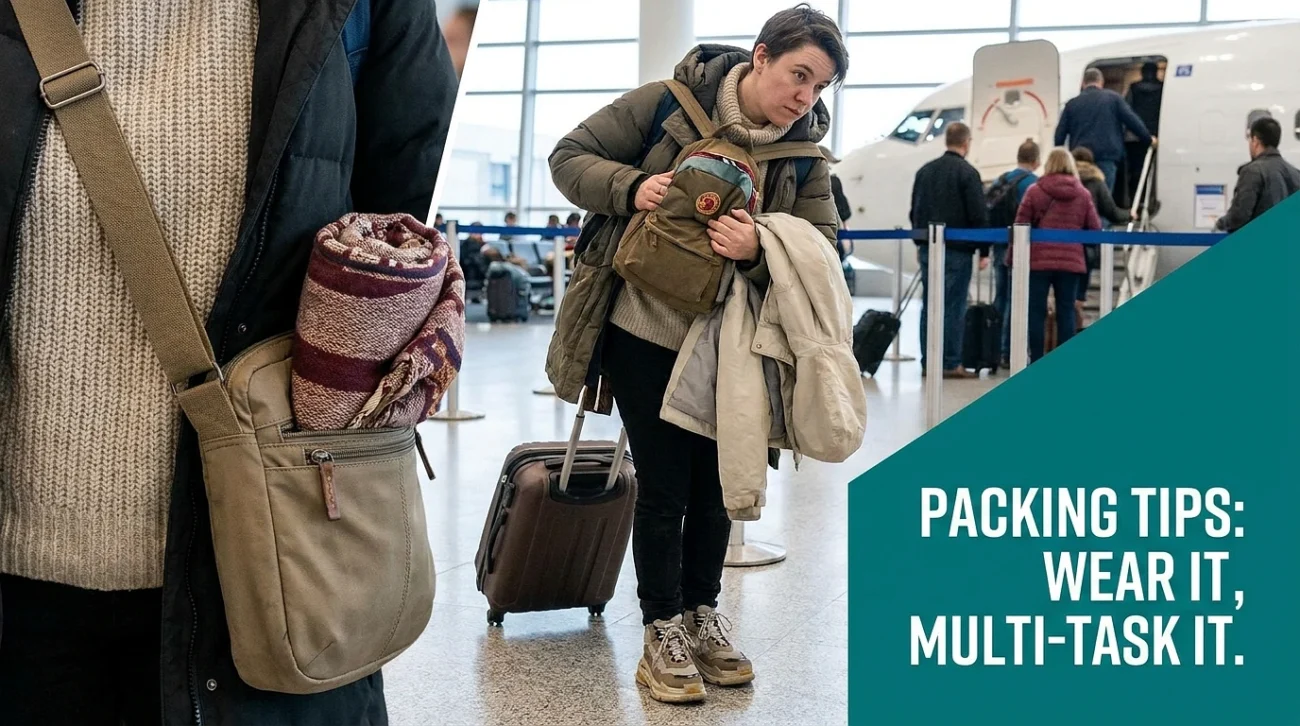
Sneakers alone swallow around 15 percent of a small suitcase. So wear them. Same goes for the thick jacket and the biggest sweater: on your body through the airport, into the overhead bin once you board, with a thin layer rolled in the seat pocket so you’re not roasting over the Atlantic.
One Item, Several Jobs
Single-purpose items are what bloat a bag. A sarong is a beach towel, a blanket, a scarf, and a cover-up depending on the hour. A plain T-shirt hikes, sleeps, and passes at a casual dinner. A crossbody bag handles sightseeing and restaurants without a swap. If something in your pile only does one job, make it argue for the spot.
Roll or Fold?
Roll most things, fold a few. Rolling compresses T-shirts, jeans, pajamas, and lightweight sweaters tighter than folding does, and rolled clothes wrinkle less because there are no hard creases. You can also see everything at a glance instead of lifting layers like an archaeologist. Structured blazers and delicate fabrics are the exception; fold those flat and lay them across the top.
Packing cubes take the rolled clothes and turn the suitcase into something closer to a filing cabinet. Tops in one cube, bottoms in another, underthings in a third. At the hotel you pull out one cube instead of unpacking the whole case, and on the last day everything goes back in minutes.
One more rule while the bag is open: leave about 20 percent of it empty. Nearly everyone flies home heavier. Market finds, a bottle from a vineyard, snacks that were supposed to be gifts. The space you leave on the way out is the repack you skip on the way back.
The Spare Bag Rule
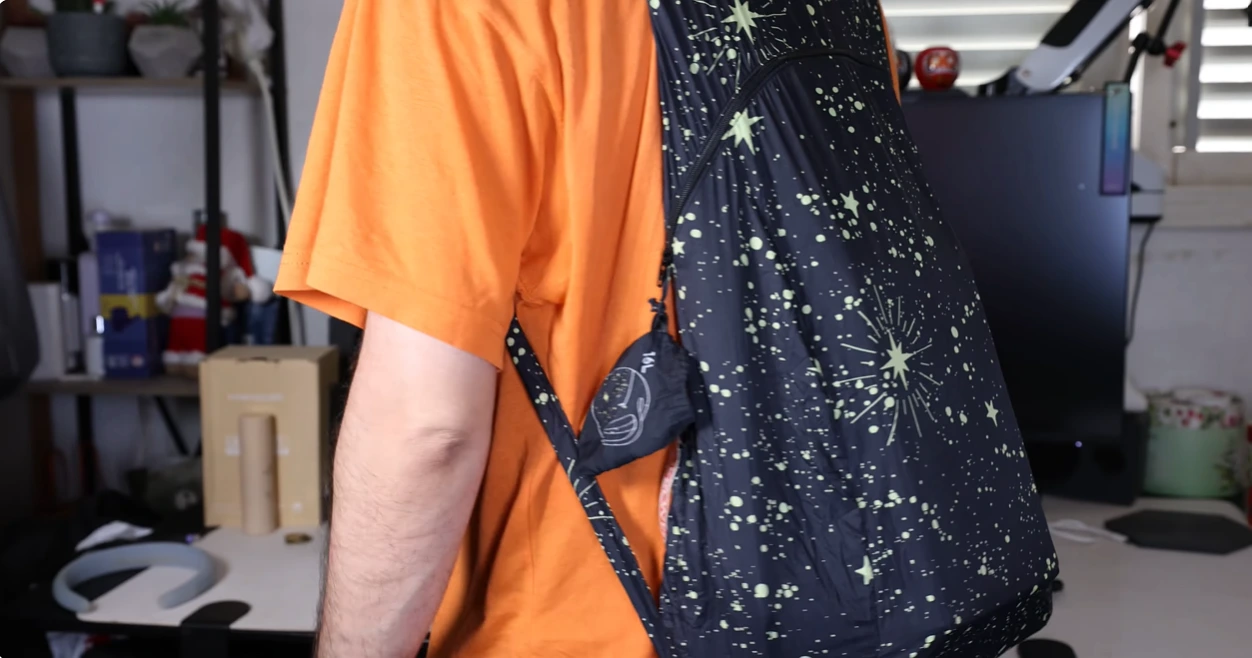
If I could push one habit on every traveler, it’s this one a best foldable bags, packed flat, always. It covers the moments no itinerary predicts. The grocery run in Barcelona. Wet swimwear after a beach afternoon that wasn’t in the plan. A farmers market haul with no sensible way to carry it.
Mine is a Nanobag, mostly because it packs down to a pouch about the size of my keys and weighs an ounce, yet carries a genuinely absurd amount of weight. The rating says 66 lb, which in practice means a full market run doesn’t faze it. For a bit more variety, a reusable bags collection with tote and drawstring options is worth a look too: the tote suits grocery and bakery stops, and the drawstring rides on one shoulder for the walk back from a shopping street.
Either way, the cost of carrying one is nothing. The cost of not having one is juggling wet towels in your arms.
The Small Stuff That Ruins Trips
Big items get all the packing attention. Small ones cause most of the actual problems.
Documents Live on Your Phone Now
Paper gets lost, and it surfaces in the wrong pocket at exactly the wrong counter. Before you leave, load your phone with:
- Boarding passes and hotel reservations.
- Rental car confirmations.
- Travel insurance details.
- A scan or photo of your passport.
Then print a single copy of the passport and insurance pages and keep it in a different bag from the originals. Phones die. Immigration lines are a bad place to rediscover this.
The 3-1-1 Rule Still Applies
TSA’s 3-1-1 rule allows liquids in containers of 3.4 oz or less, all fitting inside one quart-sized bag, per passenger. Stick to those sizes even when you check luggage, because refilling small travel bottles from full-size products at home costs a fraction of what airport versions do. And hotel shampoo exists. Unless your hair or skin has real requirements, use it.
Three Pieces of Charging Gear, Not Ten
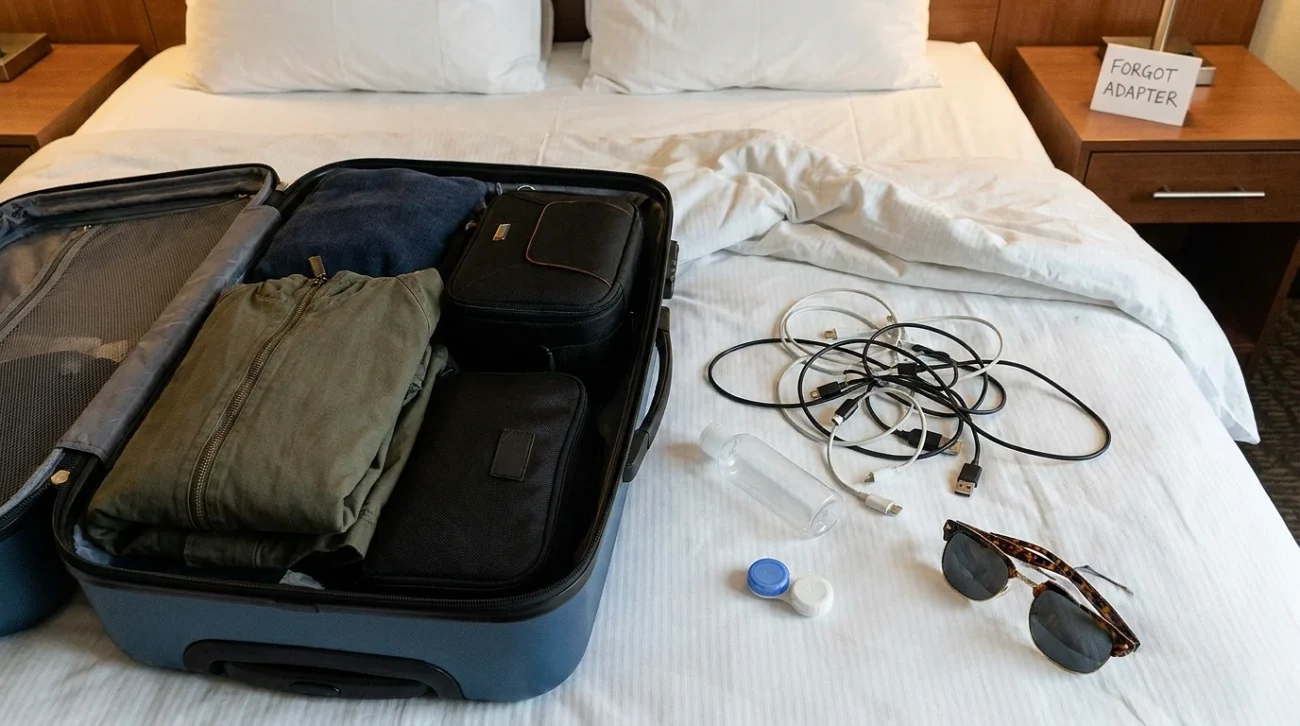
Cable clutter overstuffs a bag faster than clothes do. One multi-port charger, one slim 10,000 mAh power bank, one universal travel adapter. That hub plus two decent cables runs a phone, a laptop, headphones, and a camera. Everything else stays home.
A First-Aid Pouch the Size of a Paperback
Nobody wants a pharmacy run in a country where they can’t read the labels. Bandages, pain reliever, an antihistamine, motion sickness tablets, a small tube of antibacterial cream, plus any prescriptions in their original packaging. The whole kit fits in a pouch the size of a paperback and quietly solves most common travel complaints.
Pack the Night Before
Zip the bag the evening before you fly, then walk away from it. Look through it once more the next morning with fresh eyes.
Rushed morning packing forgets chargers, medication, and documents with impressive consistency. The overnight version catches nearly all of it, usually because whatever got forgotten is sitting out in plain sight. The passport on the printer. The charger still in the wall. Ask me how I know.