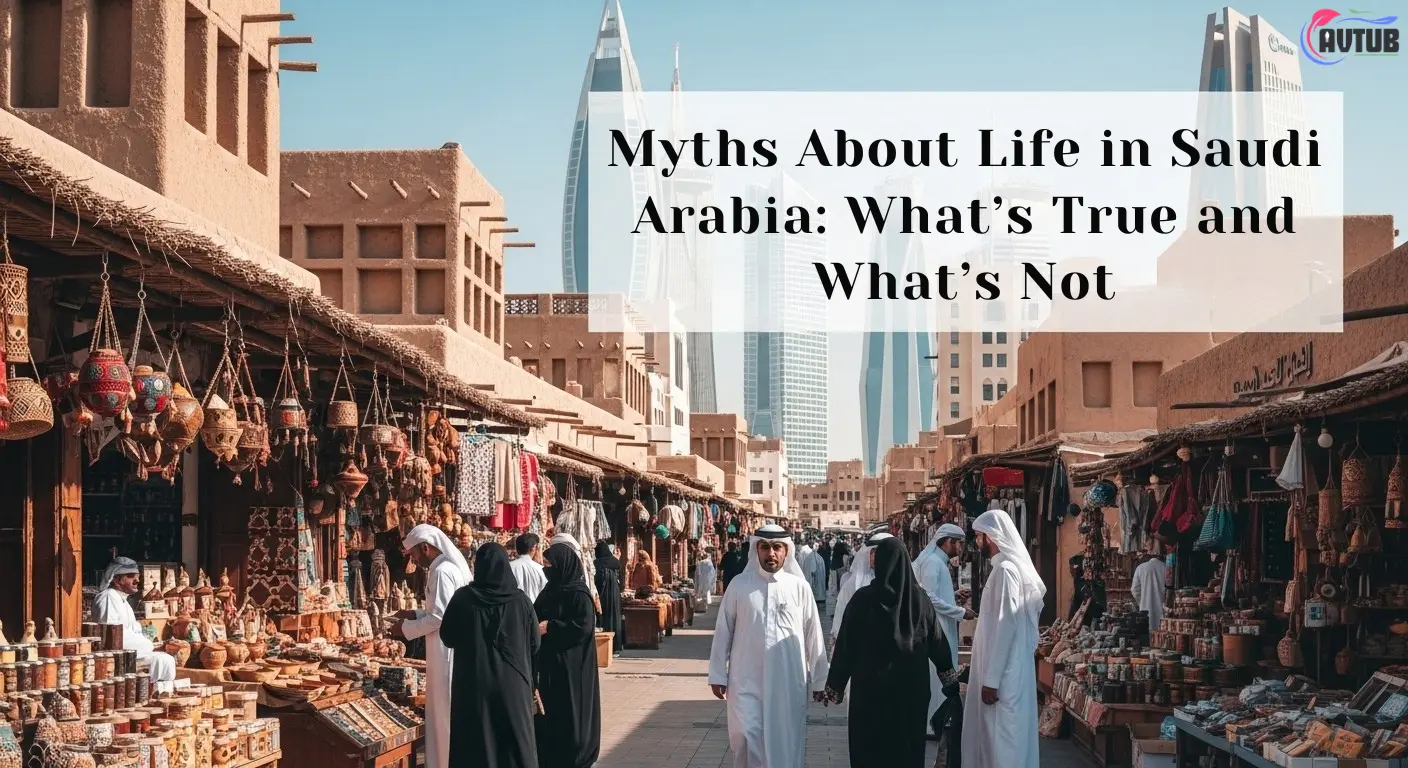
Saudi Arabia are now outdated due to recent social and legal reforms, as part of the country’s Vision 2030 plan. While it remains a conservative Islamic country with strict laws in some areas, the reality is a blend of tradition and a rapidly modernizing society.
Many impressions about Saudi Arabia become clearer when looking at real job descriptions and everyday work expectations rather than relying on general opinions. While exploring jobs in Saudi Arabia on Layboard.in, people often notice that the atmosphere in international companies, support standards, and city life vary widely depending on the region, sector, and employer.
Myths vs. Realities:
| Myth | Reality |
|---|---|
| Women cannot drive or travel alone. | The ban on women driving was lift in June 2018. Women over 21 can now obtain a passport and travel abroad or within the Kingdom without a male guardian’s permission. |
| Women must wear a full face veil/burqa and black abaya. | The abaya (a loose-fitting, full-length cloak) is no longer a legal requirement for foreign women, and the veil (hijab/niqab) is a personal/cultural choice, not a legal obligation. Modest dress (covering shoulders and knees) is expect for both men and women in public. |
| There is no entertainment or social life. | Cinemas are now open, and the country hosts a growing number of international sports, music, and cultural events. Major cities have vibrant social scenes and diverse communities. |
| All Saudis are extremely wealthy. | While the country has vast oil wealth, there is a significant wealth gap and a substantial portion of the population has average or low income, holding regular 9-to-5 jobs. |
| Saudi Arabia is entirely desert and always hot. | The country has diverse landscapes, including mountains, coastlines with coral reefs, and even experiences cool winters with occasional snowfall in northern regions. |
| English is not spoken. | English is widely use as the lingua franca in business, tourism, and most workplaces, and signs are often in both Arabic and English. |
| The country is unsafe. | Saudi Arabia consistently ranks as one of the safest countries globally, with low rates of violent and street crime against tourists and residents. |
| Non-Muslims cannot practice their religion. | Public worship of any religion other than Islam is prohibite, and there are no non-Muslim public houses of worship. However, private worship is generally tolerate for expatriates. |
Life in Saudi Arabia is extremely strict for everyone
Saudi Arabia has traditions and cultural norms that shape social behavior, especially in public spaces. However, life is not the same in every region. Large cities such as Riyadh, Jeddah, and Dammam are much more international than many people expect. Foreign workers make up a significant part of the population, and international workplaces often follow global business culture.
There are rules about dress and public behavior that are important to understand, but daily life is often more flexible than older stereotypes suggest. For example, women today can drive and work in many professions, and mix-gender public spaces have become more common in cities.
Foreigners cannot socialize or build a personal life
Many newcomers assume that social life is limite, but the experience depends greatly on lifestyle and environment. Residential compounds, workplaces, sports clubs, and expatriate communities offer opportunities to meet people and form friendships. People who enjoy socializing often find a network quickly, especially when they are open to learning local customs and respecting cultural differences.
Those who move with family often find supportive expat circles, while single professionals commonly socialize through work or community events.
The climate makes life uncomfortable
Saudi Arabia is a hot country, especially in summer. However, cities are built with the climate in mind. Homes, offices, shopping centers, and transportation are widely air-condition. The rhythm of daily life naturally adjusts to the weather, with outdoor activities happening in the evenings or cooler seasons. Many expats find that after the first few weeks, they adapt to the environment comfortably.
Daily Life in Practice
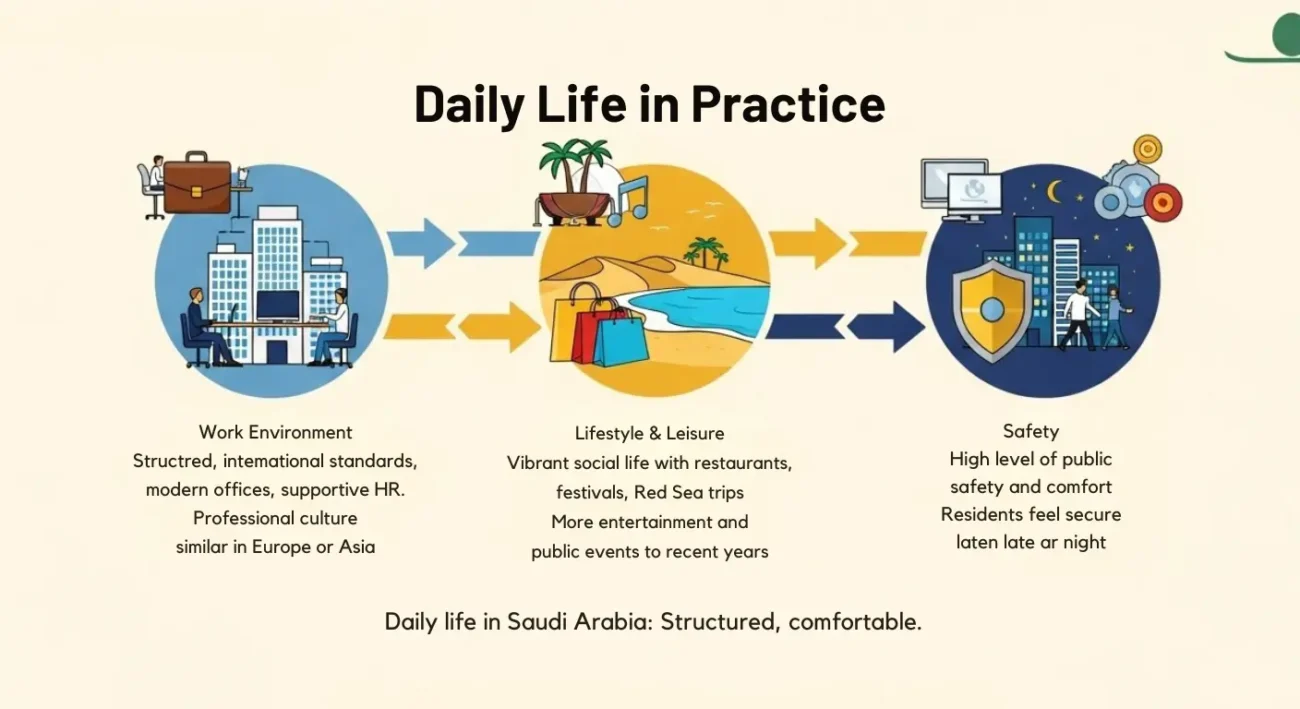
Daily routines in Saudi Arabia often feel structure, comfortable, and predictable once a person settles in. Much of this is connect to how workplaces are organize, since work life shapes the rhythm of everyday living for many foreign employees. Understanding what the professional environment looks like helps form a clearer picture of daily experience in the country.
- Work Environment: International companies and local employers with global teams usually follow structure standards, modern workspaces, and supportive HR practices. Professional communication is often similar to workplaces in Europe or Asia.
- Lifestyle and Leisure: Restaurants, shopping centers, cultural festivals, desert trips, and the Red Sea coastline provide many leisure possibilities. The last few years have brought even more public events, concerts, and entertainment options as part of national development programs.
- Safety: Saudi Arabia is known for a high level of public safety. Many foreign workers feel comfortable walking in cities even late in the evening, which is often report as a major benefit of living there.
A Balance Look Helps You Decide
Life in Saudi Arabia is shape by tradition, but it is also dynamic and changing. When stereotypes are replace with real information and personal experiences, the picture becomes clearer: the country offers strong career opportunities, financial growth, and a safe environment, especially for those who are open to learning and adapting respectfully.