A lot of people who have a headache that does not go away use over the counter medicines to treat it. But when a new combination of feelings comes up, like a height sensitivity on the scalp it could be an indication of a different problem. We think that seeing these early signals is the first step to getting long term relief. While prominent often uncomfortable sensitivity or discomfort on the back of the head and scalp is one of the most revealing occipital neuralgia first symptoms. This pain is more than simply a regular headache it is a nerve relate problem that needs to be understood in a certain way.
Scalp sensitivity can be an early warning sign of occipital neuralgia, a painful condition cause by irritation or damage to the occipital nerves. While general scalp tenderness has many potential causes, paying attention to specific symptoms can help indicate if nerve-related pain is developing.
Understand the Sensation More Than Just a Headache
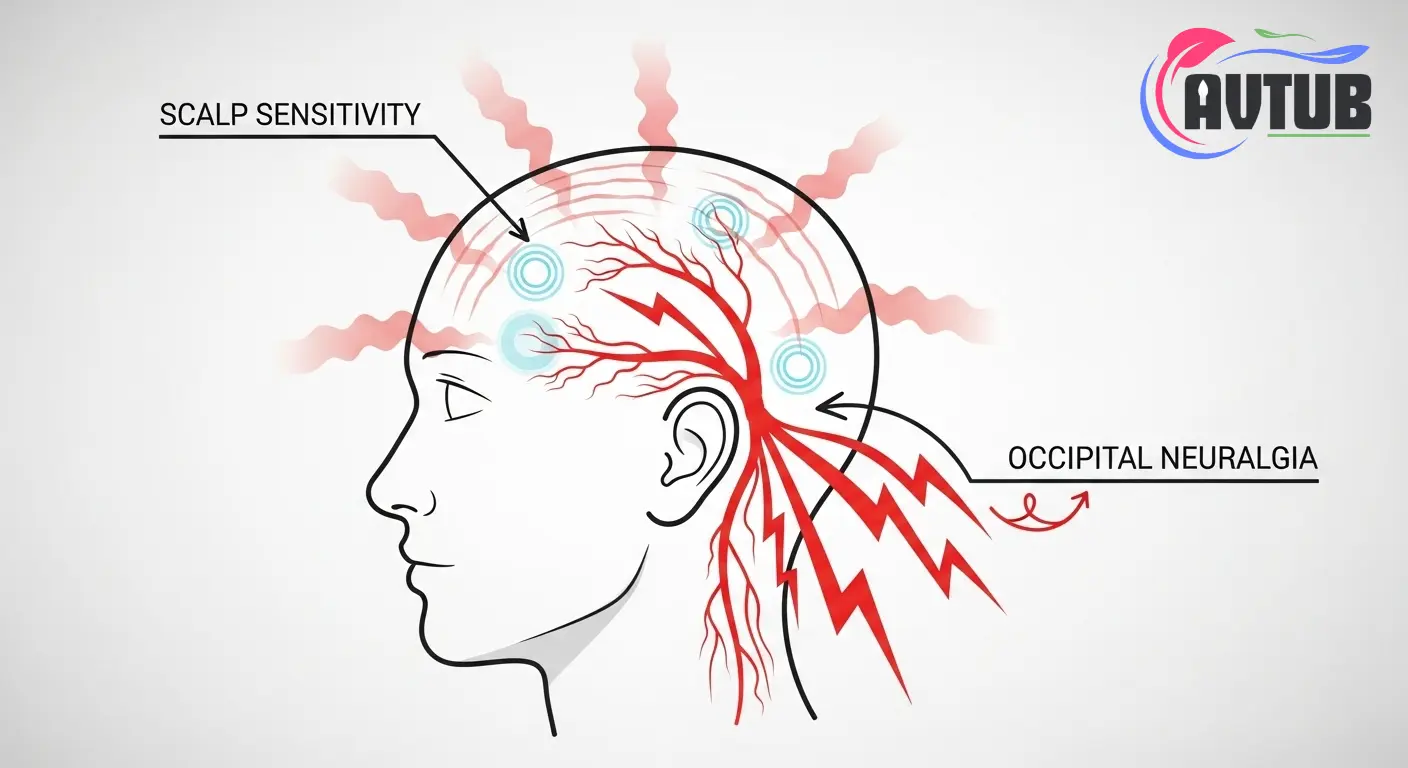
How does this sensitivity in the scalp feel, Patients often say it feels like a burning tingling or electric shock. Even the tiniest contact from a brush a pillow or a hat can be extremely uncomfortable on the scalp. This is not a common headache. It usually stays in the place where the occipital nerves go, which are the nerves that go from the top of the spinal cord to the scalp. This particular sensation distinguishes an occipital headache from other forms of cephalalgia.
Connecting Scalp Tenderness to Occipital Neuralgia
Why does this happen? While the occipital nerves can become irritated or compress. This compression can be cause by tight neck muscles trauma inflammation or even structural issues. When these nerves are aggravate they send pain signals that are interpret as coming from the scalp. This condition, known as occipital neuralgia, is characterize by these paroxysmal, shooting pains. The scalp sensitivity is therefore a key diagnostic clue, a direct reflection of the nerve’s distress. It is your body’s way of signaling that a specific nerve pathway is in trouble.
| Feature | General Scalp Tenderness | Occipital Neuralgia |
|---|---|---|
| Pain type | Soreness, itching, or tingling, typically in one or more areas. | Sharp, shocking, or piercing pain that follows the nerve path. |
| Trigger | Can be cause by hair products, tight hairstyles, or skin conditions. | Can be triggered by light touch, such as brushing hair, or by neck movement. |
| Location | Can be localized or widespread across the scalp. | Pain starts at the back of the neck/base of the skull and radiates to the scalp. |
| Associate symptoms | May have an underlying cause like an infection. | May include sensitivity to light and pain behind the eye. |
Why This Early Signal Matters
Many ignore scalp soreness for months or years. It is often misdiagnose as a Migraine Surgery Specialty Center, or sinus condition. Consequently, therapy for those illnesses bring minimal relief. Early detection of this symptom can end a distressing cycle of misdiagnosis and futile therapies. Scalp sensitivity as a nerve issue can lead to a more accurate diagnosis and tailore treatment sooner.
Potential Next Steps and Pathways to Relief
Recognizing this symptom prompts a significant inquiry: What actions can be taken? Always start with a full evaluation. We will talk in depth about your symptoms and do a physical assessment to check how well your nerves are working. A diagnostic nerve block can be useful for a lot of people. If this block helps with the pain, the occipital nerves are likely the cause of the problem. This confirmation is strong. It changes the subject from general pain management to a specific plan for treating occipital neuralgia.
Exploring Effective Treatment Options
While once a diagnosis is confirm a range of treatment options can be explore. Conservative approaches like physical therapy and medication management are often starting points. For cases where these provide insufficient relief interventional procedures are consider. For instance many patients find significant benefit from target interventions. The effectiveness of one such procedure is detail in our resource, Occipital Nerve Blocks: How Effective Are They for Chronic Headache Relief This procedure can calm the inflame nerves, providing substantial and often long-lasting relief from the pain and scalp sensitivity that defines this condition.
Taking the First Step Toward Understand
- Acknowledging Patient’s Pain: The persistent, unpredictable pain is recognize as making every element of life harder and causing feelings of loneliness.
- Promise to Listen: The promise is made to listen to the patient’s full story, including symptoms that others may have overlook.
- Importance of Specific Symptoms: A tender, aching scalp is highlight as a significant symptom, not a minor one, and is place at the top of the list for focus.
- Personalized Plan: By focusing on the core reason for the symptoms, a unique plan will be develope to help the patient feel better and improve their quality of life.
Conclusion
A lot of people do not pay attention to scalp sensation yet it is an important early indicator of occipital neuralgia. Recognizing it is the key that can lead to the right diagnosis after years of agony that can not be explain. A future without this nerve relate pain is possible with a specialize and caring approach.