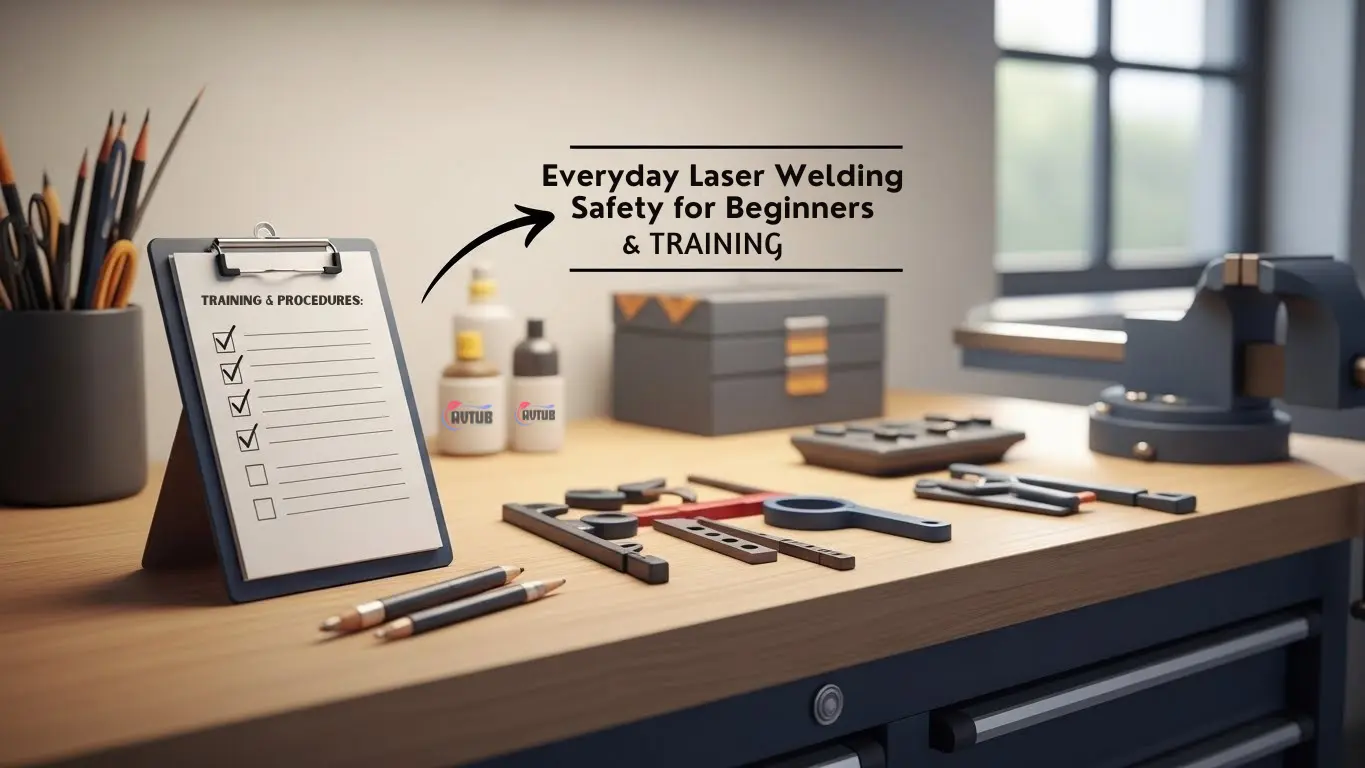
Everyday laser welding safety for beginners is about building smart habits from day one wearing the right protective gear, setting up a safe workspace, and following reliable operating practices to reduce serious risks from high-powered laser equipment.
Before you ever switch on a laser welder, there’s one thing to understand clearly: personal protective equipment (PPE) is non-negotiable. It’s your first line of defense against powerful radiation, flying molten metal, and invisible fumes that can cause harm in seconds. This guide walks you through what you need, why it matters, and how simple safety routines can help you weld with confidence instead of guesswork.
Understanding the Hidden Hazards of Laser Welding
Optical Radiation and Eye & Skin Risks:
Laser welders emit extremely concentrated energy that can cause instant and permanent eye damage even from reflected beams bouncing off metal surfaces. Many laser systems operate in near-infrared wavelengths, meaning the beam can be invisible while still dangerously strong. Skin exposure can also result in burns from radiant heat or reflected energy.
Fumes, Particulates and Breathing Risks:
When a laser welds metal, it vaporizes not just the base material but also any surface coatings or residues. This creates ultrafine particles and toxic fumes you may not see or smell. Without proper extraction or respiratory protection, these particles can enter your lungs and cause long-term health problems.
Heat, Fire, Mechanical and Electrical Dangers:
Laser welding concentrates intense heat into a very small area. Hot spatter and molten droplets can ignite nearby flammable materials. On top of that, laser welders contain high-voltage components, cooling systems, and sensitive optics—all of which require proper handling to avoid electrical or mechanical accidents.
Essential Protective Gear for Everyday Laser Welding
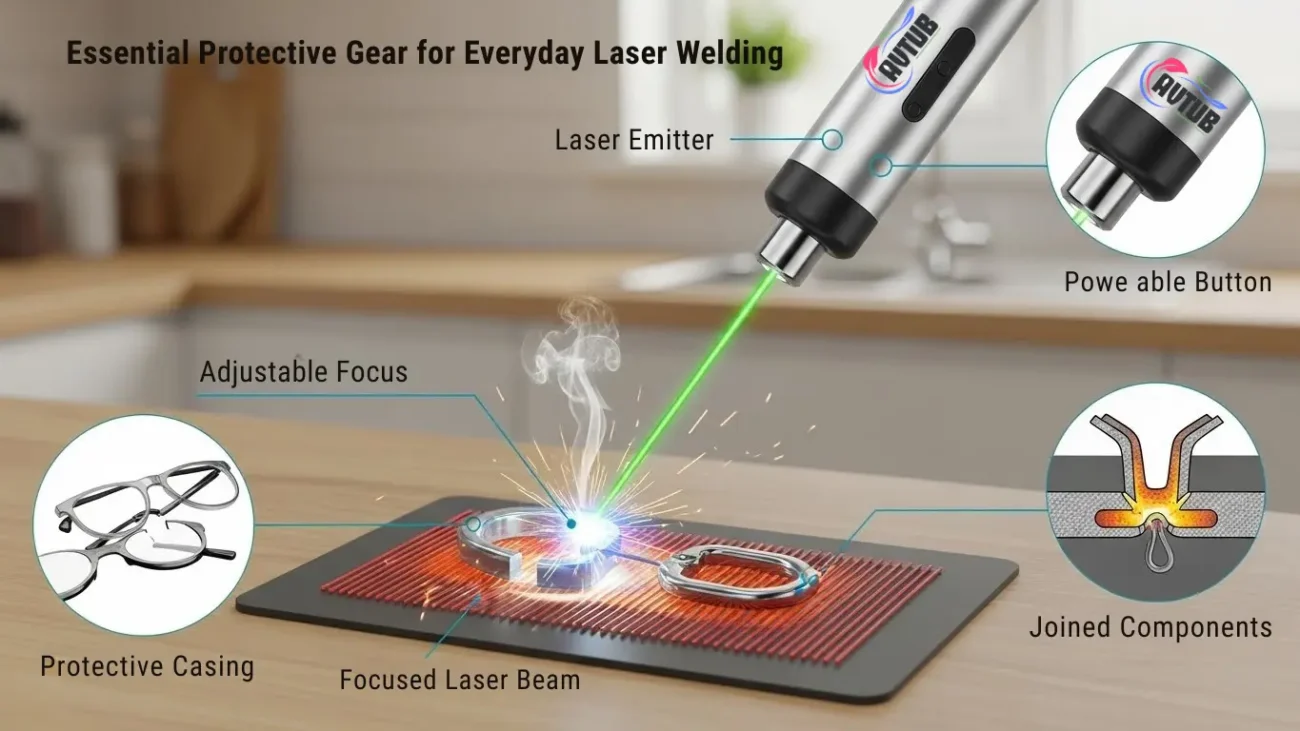
Laser Safety Eyewear and Helmets:
Eye protection is your top priority. Standard welding helmets designed for MIG or TIG welding do not protect against laser wavelengths. You must use eyewear rated for your laser’s specific wavelength (commonly around 1064 nm for fiber lasers) and with the correct Optical Density (OD).
A laser-rated welding helmet adds another layer of protection by shielding your entire face from stray reflections and radiant energy.
Protective Clothing and Heat-Resistant Gloves:
Your clothing should protect you from heat, sparks, and spatter. Best choices include:
- Flame-resistant welding jackets
- Heavy-duty, heat-resistant gloves
- Long sleeves and welding pants
- Safety shoes or work boots
Avoid synthetic fabrics at all costs they can melt onto your skin if exposed to heat.
Respiratory Protection and Fume Control:
Depending on the materials you’re welding, additional protection may be needed:
- Certified respirators (FFP2 or FFP3)
- Activated carbon filters
- Local exhaust ventilation or fume extractors
Even when fumes seem minimal, laser welding can produce ultrafine particles more harmful than visible smoke.
Creating a Safer Welding Environment
Barriers, Curtains, and Controlled Work Zones:
Safety goes beyond what you wear. A proper Laser Controlled Area (LCA) should include:
- Laser-rated curtains or enclosures
- Light-tight barriers
- Warning signs and indicator lights
- Access control and restricted entry
- Interlock systems and emergency stops
These measures protect not only you, but anyone nearby.
Using and Maintaining Safety Gear the Right Way
Correct Fit and Selection:
Protective gear only works if it fits correctly. Eyewear should sit flush against your face, clothing should fully cover exposed skin, and gloves should allow movement without leaving gaps.
Regular Inspection and Replacement:
Before each session, check:
- Eyewear lenses for cracks or scratches
- Clothing for burn marks or thinning fabric
- Gloves for heat damage
- Curtains and barriers for light leaks
- Fume extractors and filters for airflow issues
Think of PPE as consumable replace it as soon as it’s compromised.
Training, Awareness and Shared Responsibility
Laser welding safety isn’t a solo effort. Anyone entering the welding area should understand:
- Basic laser hazards
- Required PPE
- Emergency procedures
- Proper eyewear usage
A simple safety briefing can prevent major accidents.
Beyond PPE: Building Healthy Welding Habits
Engineering and Administrative Controls:
The safest workshops combine PPE with smart design and procedures, such as:
- Fully enclosed beam paths
- Clearly marked emergency stops
- Clean, clutter-free workspaces
- Proper grounding and cable management
- Documented safety rules and training
These habits make safety automatic rather than reactive.
Following Recognized Safety Standards:
Industry standards help guide best practices, including:
- ANSI Z136 laser safety standards
- IEC 60825-1 international laser regulations
Regular reviews and audits help spot problems before they turn serious.
A Simple Pre-Weld Safety Checklist
Before every session, make sure:
- Correct laser-rated eyewear is on
- Protective clothing and gloves are worn
- Ventilation or fume extraction is running
- Laser curtains and barriers are secure
- Workspace is clear of flammable materials
- Fire extinguisher is nearby
- Electrical connections are checked
- Everyone in the area is properly protected
If even one item is missing, pause and fix it before starting.
Final Thoughts
Laser welding offers precision, speed, and impressive results but only when safety comes first. As a beginner, forming smart daily habits around PPE, workspace setup, and hazard awareness protects both your health and your long-term ability to weld. When safety becomes routine, confidence follows. With the right preparation, laser welding can be productive, enjoyable, and sustainable letting you focus on craftsmanship instead of risk.