I have watched a lot of women decide they cannot wear heels. It usually happens the same way. One bad pair, one long evening, a walk to the car in bare feet at midnight, and that is that. Heels are off the list forever.
What I want to say, carefully, is that the pair was probably the problem.
Not always. I will get to the part that genuinely is the heel’s fault, because it exists and pretending otherwise would be a waste of your time. But the shoe that ruined your night was very likely too narrow across the ball of your foot, or shaped like a triangle when your foot is not, or bought at eleven in the morning when your feet were an entirely different size than they were by nine that evening.
The Width, And Why Length Keeps Fooling People
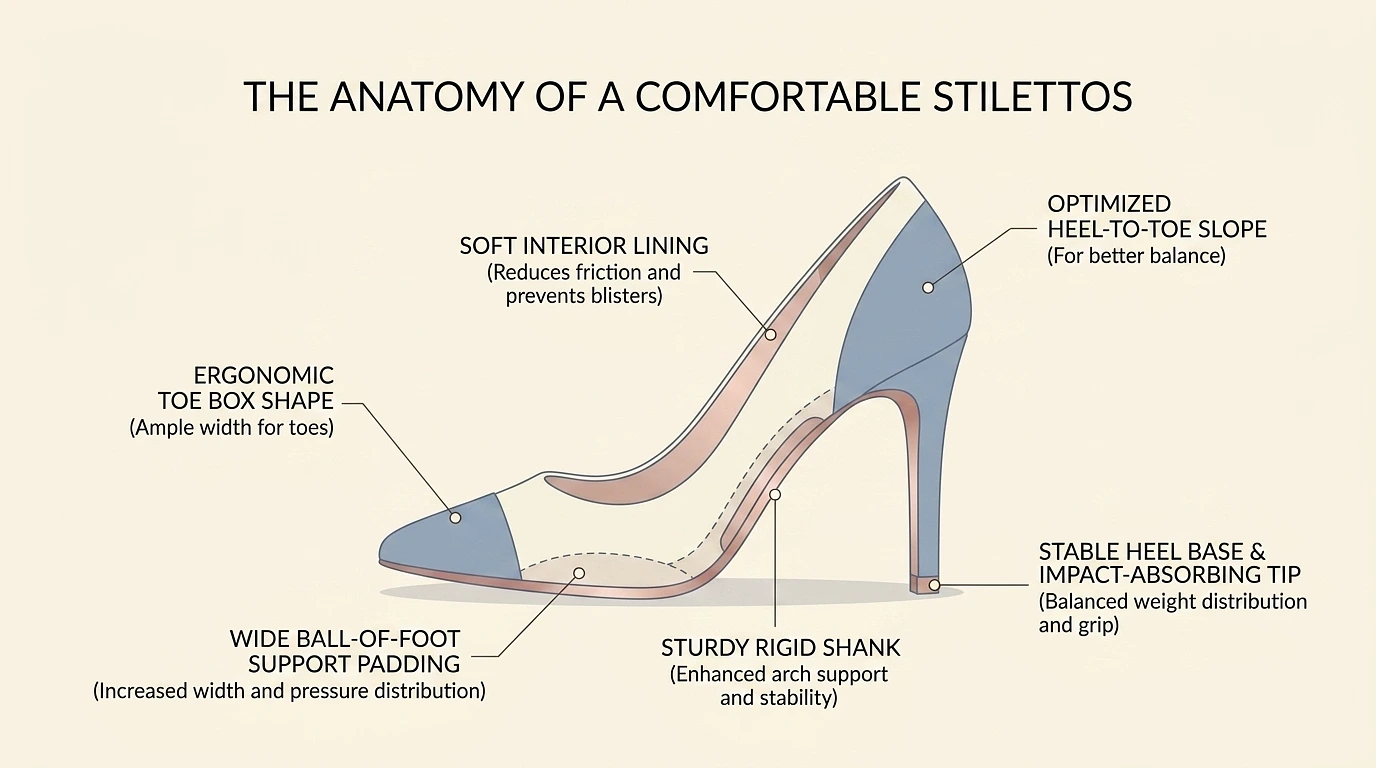
Your foot is widest across the ball. Everyone knows this and almost nobody shops as though they do, because shoe sizing is sold on length and length is the one measurement that rarely causes the pain.
Here is the bit that surprises people. When you put on a heel, your body weight moves forward onto the front of the foot, and a loaded forefoot spreads sideways. So the foot you measured sitting in a chair is not the foot that is in the shoe two hours into a wedding. This is why so many women wear a half size larger in a stiletto than in a flat and feel slightly embarrassed about it, as though it means something about them. It does not. It means their foot behaves like a foot.
If you take one practical thing from this, take the timing. Try shoes on late in the day. Feet swell over the course of a day whether or not anything is wrong with them, and a shoe that fits at breakfast is making a promise it cannot keep.
Toe Box Shape Does More Damage Than Toe Box Width
A pointed toe narrows precisely where your foot is broadest, and it does it in the shape of a wedge, which pushes the toes together rather than simply pressing on them.
That is where the burning under the ball of the foot comes from, and the numbness that shows up in the third and fourth toes, and over enough years, the bunion. An almond toe or a softly squared one gives you nearly the same long line visually while leaving the metatarsal heads somewhere to sit. Depth matters too, which is less obvious. A toe box can be wide enough across and still shallow enough that it presses down on the joints from above.
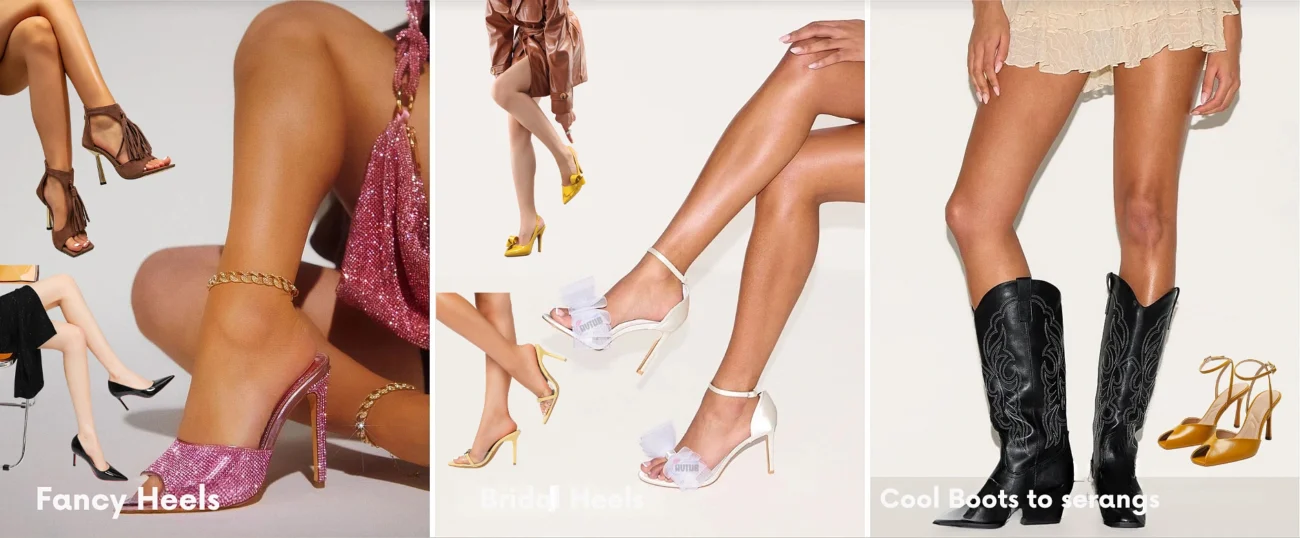
The frustrating thing is that you cannot tell any of this from a photograph, and most of us shop from photographs. Two pairs of stiletto heels can look nearly identical on screen and fit completely differently, which is why the last shape matters more than the picture and why it is worth staying with a maker once you find one that suits your foot. When I look through Rosatina heel categories, the thing I am actually looking at is toe shape and heel placement rather than colour, and the size guide is more use than the model shot.
The Heel Base, Which Almost Nobody Looks At
This one I only started paying attention to a few years ago and I feel slightly foolish about the delay.
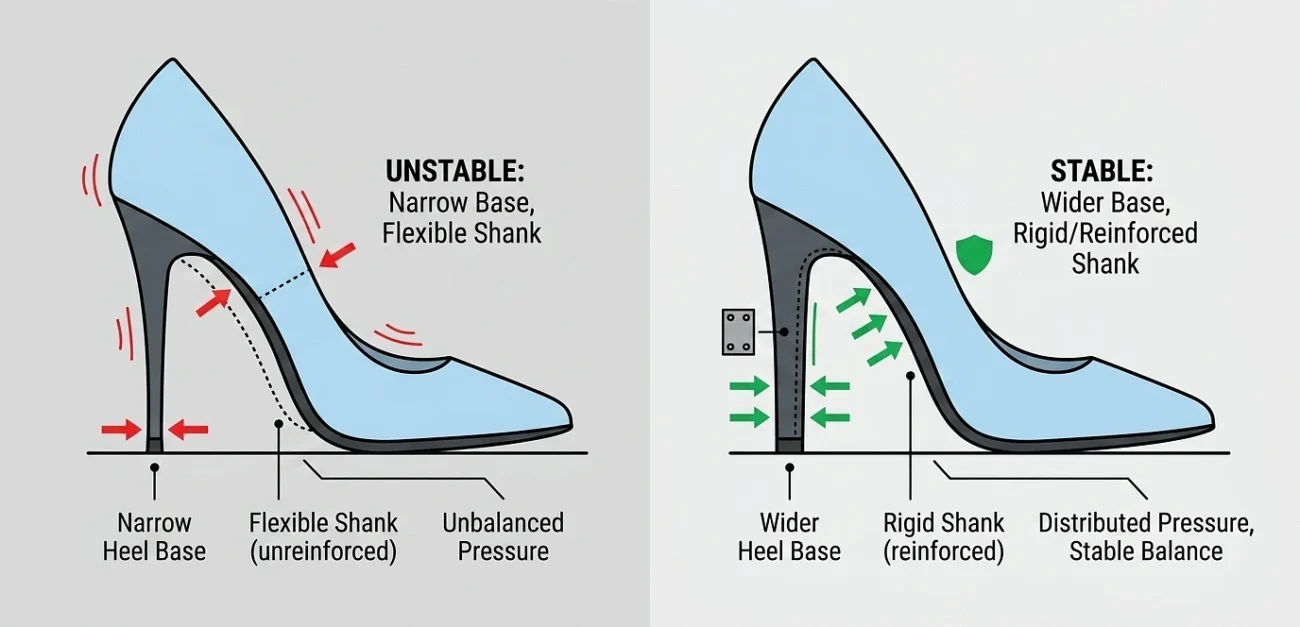
Two stilettos of the same height can have quite different base diameters where the heel meets the ground. The difference sounds cosmetic. It is not. Research on heel base size found that a smaller base increased centre of pressure deviation and shifted pressure medially early in the gait cycle, and the women in the study reported feeling less stable in a way that matched the measurements.
So when you are choosing between two similar pairs, look at the bottom of the heel. Wider is steadier, costs nothing, and your ankles will notice on a cobbled street.
While I am here, the shank is worth a mention even though it is unglamorous and hard to check in a shop. It is the stiff piece running under the arch. Hold the shoe at both ends and press. If it folds easily through the middle, your foot muscles are going to be doing that structural work all evening, and they will let you know about it.
Now The Part That Is Genuinely The Heel
I said I would be straight about this.
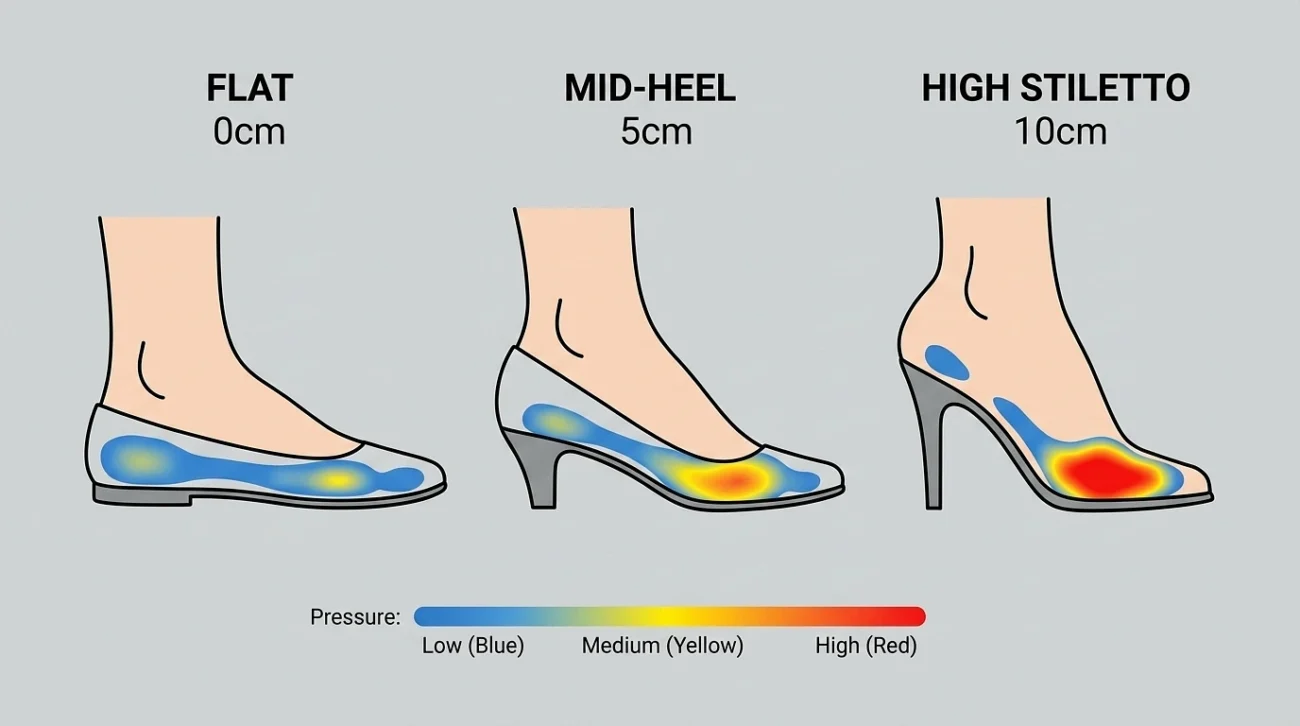
Height changes how your foot is loaded, and no amount of good fit undoes it. Raising the heel moves peak pressure off the rearfoot and onto the forefoot and toes, and the effect scales with height. One study of thirty women found stability limits worsening noticeably once the heel reached around 7cm. There is an ankle consequence as well, since heel elevation puts the ankle and hindfoot into a position that reduces sideways stability, which is the reason lateral ankle sprains happen more in heels than in flats.
A perfectly fitted five inch stiletto still asks more of your forefoot than a perfectly fitted three inch one. That is simply true and I would rather you knew it.
What I find genuinely encouraging, though, is that the same body of research keeps finding adaptation. Women who wear heels regularly show better pressure distribution and better control than women who do not, at identical heights, and there is measurable biomechanical adaptation in habituated wearers. Your body adjusts to what you ask of it often enough.
Which points at the sensible approach rather than the all or nothing one. Do not debut a new height at an eight hour event. Move between heights across the week instead of living at one pitch, which is partly why I keep a pair of block heels in rotation even though stilettos are what I actually like. Match the height to what the evening involves, because a seated dinner and a standing reception are not the same purchase. And carry flats for the walking parts. Everyone who wears heels a lot does this. It is not giving up, it is the whole trick.
One thing I would not treat casually. If you already have bunions, a neuroma, plantar fasciitis or diabetes, heel choice stops being a style question and becomes a medical one, and the pressure shifts described above land very differently on a foot that is already compromised. That is a podiatrist conversation, not an internet one.
Otherwise, the next time a pair hurts, look at the ball of your foot before you look at the heel. Nine times out of ten in my experience that is where the answer is, and it is fixable at the point of buying rather than something you have to accept about yourself.