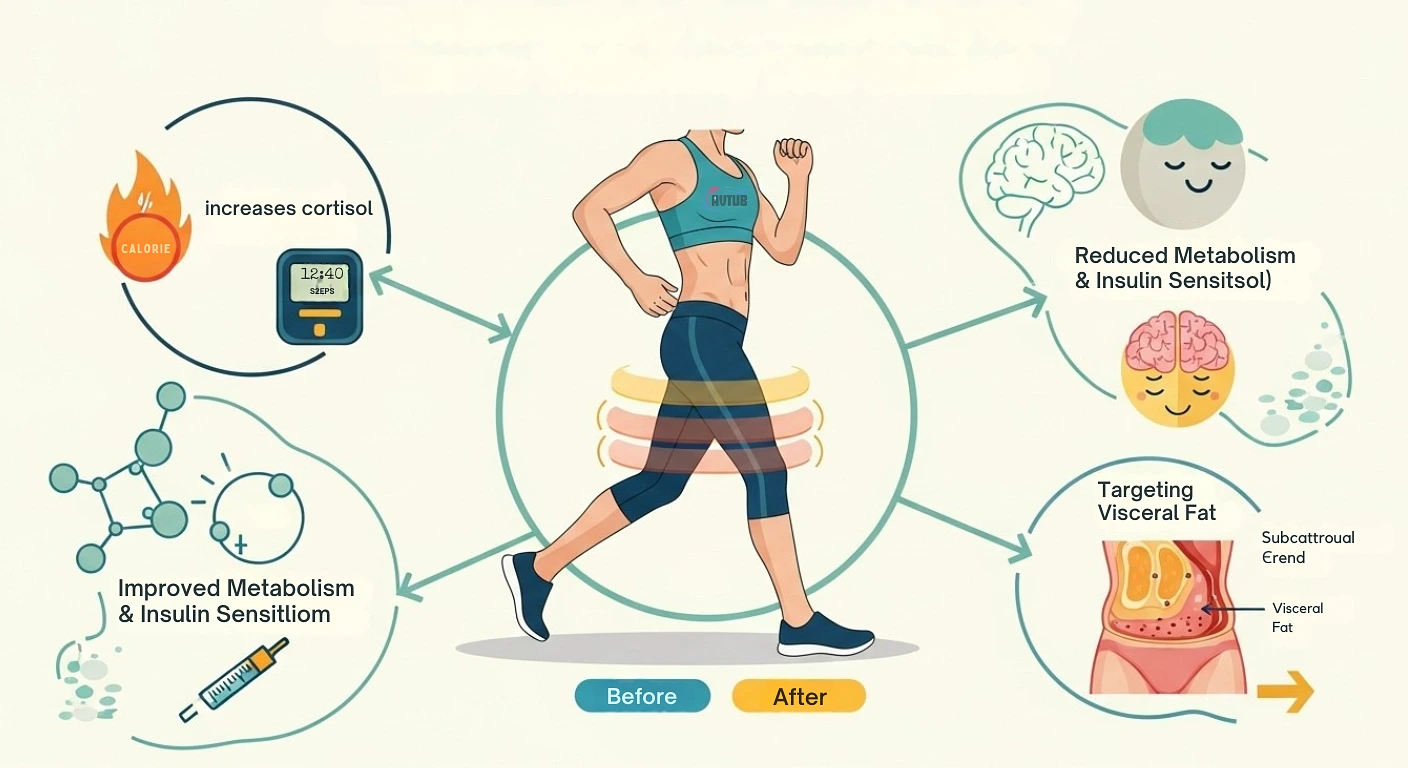
Yes. Walking is among the best, sustainable fat-burning tools to lose belly fat not because it burns the fat on your stomach directly, but because it always prepares your body to burn the fat first, the visceral one.
Fat cannot be spot-reduced. Hundreds of crunches will not select fat locality. What walking does is that it causes a small calorie deficit, enhances the way your body uses insulin, and decreases the hormonal factors that instruct your body to store fat in the deepest parts of your abdomen. By walking regularly, in particular at an efficient pace, your body will burn up the store fat to fuel your body and at the same time maintain the muscle which keeps your metabolism up and running.
Why Walking Works for Your Stomach
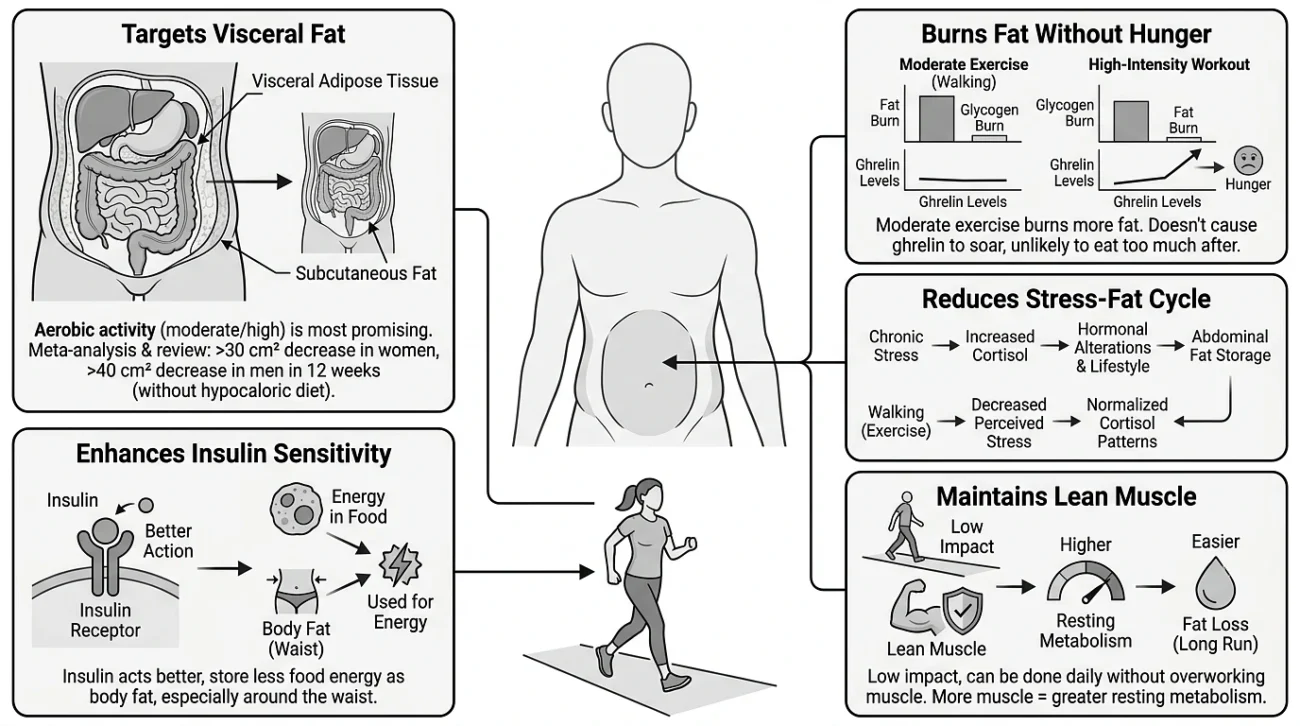
- It goes after visceral fat, head-on: Visceral adipose tissue, or the fat that encircles your liver, intestines, and other organs is an active part of the body and responds favorably to aerobic activity. A meta-analysis and systematic review identified moderate or high intensity aerobic training as the most promising intervention to decrease visceral adipose tissue in overweight adults and a program of exercise without a hypocaloric diet as a means of decreasing visceral fat by over 30 cm2 in women and over 40 cm2 in men in 12 weeks.
- It also burns fat without causing excessive hunger: During a moderate exercise your body burns more fat than glycogen. As opposed to high-intensity workouts, walking does not cause ghrelin to soar, and therefore you are not likely to eat too much after doing it.
- It reduces the stress-fat cycle: chronic stress increases cortisol and cortisol is always associate with more abdominal fat storage due to hormonal alterations and lifestyle. Exercise, particularly walking, has been shown to decrease perceived stress, and normalize cortisol patterns.
- It maintains lean muscle: Walking does not cause a lot of impact, and therefore can be done every day, without overworking the muscle. The more muscle, the greater the resting metabolism and the easier it is to lose fat in the long run.
- It enhances insulin sensitivity: When insulin acts better, then you store less of the energy in your food in body fat, especially around the waist.
How to Walk Away the Fat: 4 Pro Strategies
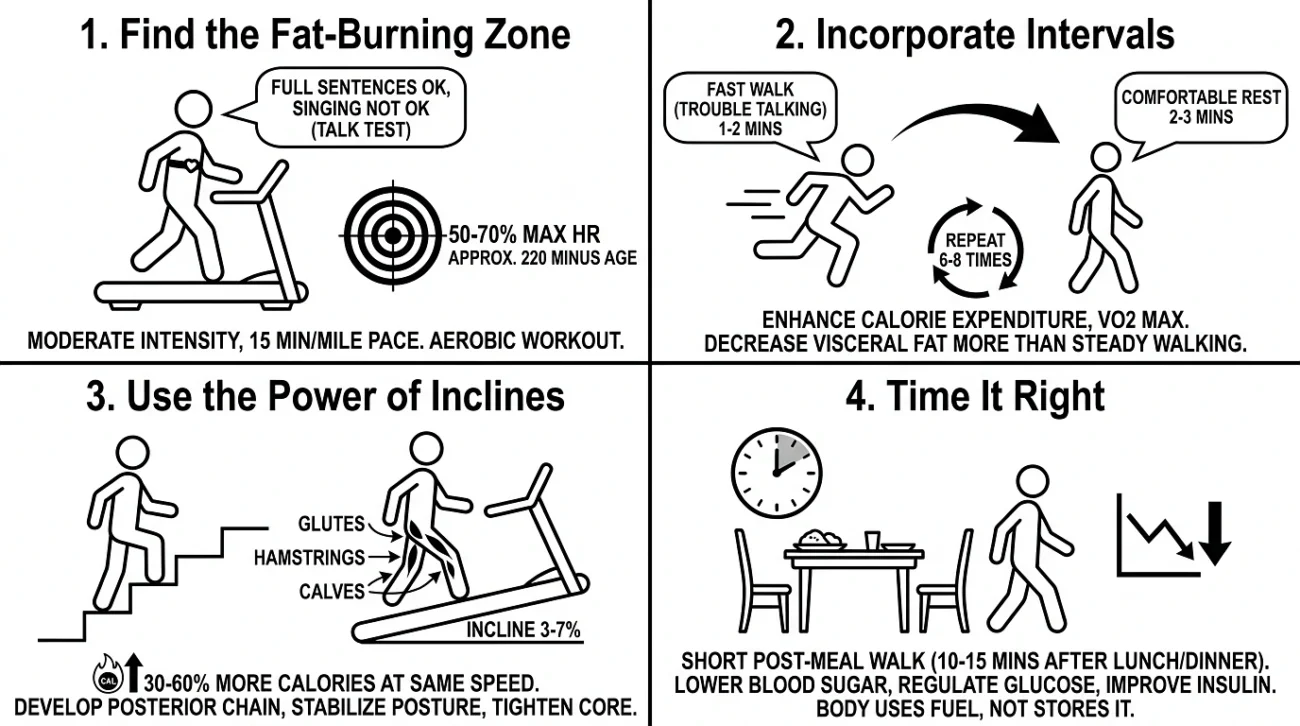
1. Find the Fat-Burning Zone
Target average intensity. Breathing and heart rate are much faster when you are exercising at moderate intensity, but you can still speak. Take the talk test: you should be able to speak full sentences, but not to sing.
To most individuals this amounts to 50-70 percent of maximum heart rate (approximately 220 less your age) or a moderately brisk walk of about 15 minutes per mile. Such a speed makes walking not just a casual exercise but a real aerobic workout.
2. Incorporate Intervals
Alternate fast walking (troubling to talk) with 2-3 minutes of comfortable rest 1-2 minutes. Repeat 6 to 8 times. Intervals enhance overall calorie expenditure, enhance VO2 max, and have been demonstrated in studies to decrease visceral fat even more than moderate low-intensity walking by itself.
3. Use the Power of Inclines
Glutes, hamstrings, and calves are engage three to seven times in hills, stairs, or a treadmill incline of 3 to 7 percent, compare to flat ground. You will use up 30 to 60 percent more calories in the same speed, and you develop the posterior chain that helps stabilize the position and tighten the core.
4. Time It Right
Short walk after a meal is a metabolic cheat code. Research shows that two minutes of post-meal walking have the potential to lower blood sugar, and also decrease the chances of developing diabetes and larger studies suggest that post-meal walking could be utilize to regulate glucose levels and improve the ability of insulin to work better. Test after 1015 minutes after lunch and dinner with the glucose peaks within 90 minutes. It is this time that instructs your body to use fuel and not to store it.
Your Weekly Plan
You do not need marathon sessions. You need consistency and progressive volume.
| Goal | Daily Target | Weekly Total | How It Looks |
| Health Maintenance | 22 minutes brisk | 150 minutes | 30 minutes, 5 days per week |
| Weight Loss | 45 to 60 minutes | 300+ minutes | 45 min walk + 2 strength days |
| Belly Fat Focus | 8,000 to 10,000 steps | ∼35 to 50 miles | Mix of brisk walks, inclines, and 2 post-meal walks |
The CDC and WHO both recommend at least 150 minutes a week of moderate-intensity aerobic activity for adults, or 75 minutes vigorous, and note that 150 to 300 minutes provides additional benefits for weight management. For fat loss, aim for the upper end.
Make It Stick: Pro Tips From Practice
- Split it up: Short bursts of 30 minutes of exercise can be maintain only once or twice per week, whereas the same time spent in three brisk 10 minute walks can be as effective in blood sugar and fat oxidation as one 30 minute block, and can be much easier to sustain (Piercy, 2001).
- Load, not time: Three days per week: carry light hand weights 5 minutes, make purposeful arm movements or wear a weight vest to become more expensive to energy without jogging.
- Combine with proprietary and dietary fiber: The deficit results in walking and nutrition choice determines the outcome. Target between 25-30 grams of protein consume at each meal and plenty of soluble fiber in order to minimize the accumulation of visceral fat.
- Cadence, not steps: Look forward to 100 steps/minute on the fast intervals. Most adults are dependably in moderate intensity put in that cadence.
- Fast morning, dined evening: Morning walk can aid the regulation of the cortisol rhythm. A late evening, after dinner walk, sharpens off the largest glucose spike of the day, and suppresses evening craving.
What to Expect
- Week 12: improve sleep, less bloating, waist is looser due to decrease water retention and stress.
- Week 4-6: a quantifiable reduction in the waist circumference, usually 1 to 2 inches, despite a minimal change in scale weight.
- Week 12: research indicates that regular walking interventions reduce abdominal fat by a significant margin, enhance insulin sensitivity and decrease inflammatory cytokines such as TNF-alpha and IL-6.
Walking will not make you have a six-pack by itself but it will help to reduce the harmful deep belly fat which is the cause of metabolic disease and in a manner that you can actually maintain throughout years. Begin with a 20 minutes brisk walk today, a hitch the next day and a 10 minutes walk after dinner. Your feet will be follow by your stomach.