I bought a hydrogen water bottle in February because a cousin wouldn’t stop talking about hers. It cost $89, it glowed blue for three minutes, it hissed when I opened it, and the water tasted exactly like water. I’ve used it most mornings since. I can’t tell you it’s done anything for me, and I’m not sure anyone selling one can either, but I did learn a lot about what the numbers on these listings mean, and most of it isn’t on the box.
Start with the biggest one. Amazon is full of bottles promising 3,000, 5,000, even 7,000 PPB of hydrogen. Water sitting in an open glass at normal air pressure holds about 1.6 PPM, which is 1,600 PPB. The bigger figures aren’t made up. They’re measured inside a sealed, pressurized bottle, and they start leaving the moment you unscrew the cap. That hiss I mentioned is the sound of your extra hydrogen heading for the ceiling.
What Molecular Hydrogen Is And Why People Started Drinking It
Molecular hydrogen is H2, two hydrogen atoms stuck together, the smallest molecule there is. The wellness interest goes back to a 2007 paper in Nature Medicine from a Japanese team led by Shigeo Ohta, who found that hydrogen gas neutralized the hydroxyl radical, one of the more destructive free radicals, while leaving the useful ones alone. Several hundred studies have followed, mostly in rats and mice, some in people.
Why The PPB Number On The Box Is Really A Pressure Number
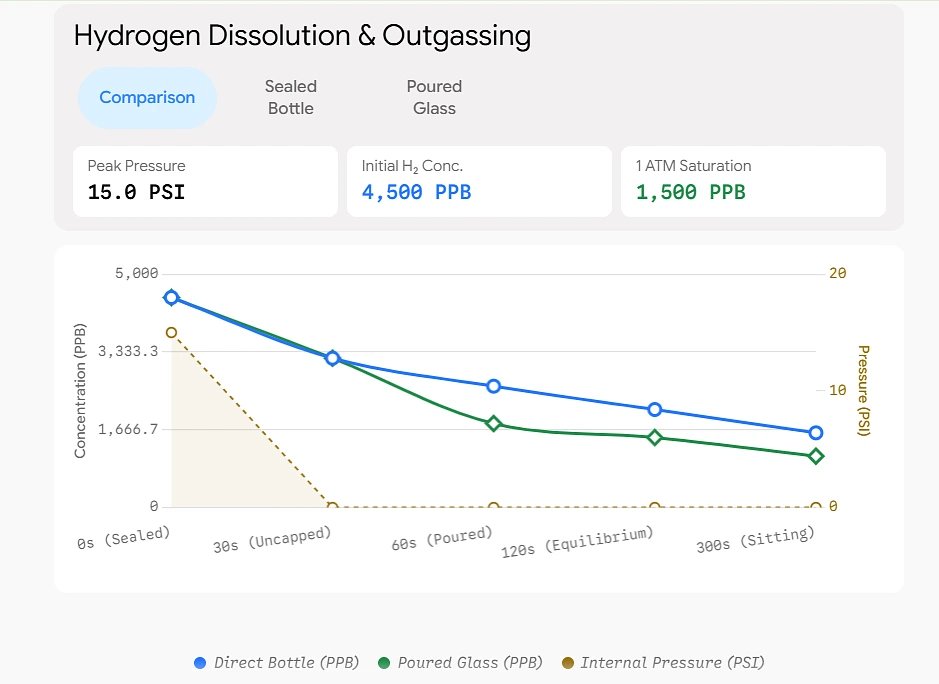
The newer bottles run several electrolysis cycles back to back in a sealed chamber. Because the hydrogen has nowhere to go, pressure builds, and the reading inside can genuinely reach 3 to 5 PPM while the cap is on. That’s where the 3,000 to 5,000 PPB claims come from, and they’re not fake.
Then you open it. The pressure drops, the excess gas escapes, and within a minute or two of being poured into a glass the water is back at or below 1.6 PPM. My bottle’s manual, to its credit, says drink straight away. Most listings don’t.
So the real question is how much is left when it reaches your mouth, not what the peak was. Things that help:
- Drinking straight from the bottle, right after the cycle, before the gas has escaped.
- A bottle that generates while sealed and holds pressure until you open it.
- Fine bubbles, which stay dissolved longer than big ones.
- Cold water, which holds slightly more gas than warm.
A bottle that reliably gives you 1 to 1.5 PPM at the moment you drink is doing as well as an open glass allows. A bottle advertising 5 PPM is describing the inside of the cap.
What HydrOxy Gas Is And Whether The Oxygen Adds Anything
HydrOxy, also sold as Brown’s Gas or HHO, is what you get when you split water with electricity and keep both gases together: two parts hydrogen, one part oxygen, same as water. Pure hydrogen generators throw the oxygen away. HydrOxy generators keep it, and the companies selling them say the mixture does more than hydrogen alone.
I’ve read the pages that make that case, and I’ve looked for the trials behind them, and they aren’t there. The oxygen in HydrOxy is a small amount on top of the 21% you already breathe. “Oxygen synergy” is a theory with testimonials attached, not a finding. If you want hydrogen, you’ll get it from a HydrOxy machine. Whether the oxygen does anything extra is an open question, and I’d lean towards no.
HydrOxy can be breathed through a nasal cannula or bubbled into water. Either way you’re mainly getting hydrogen, and the same saturation ceiling applies to the glass.
How These Devices Make The Gas And Why The Cell Design Matters
The $60 bottle and the $2,000 inhalation machine both split water with electricity. The thing that separates a good device from a bad one is what happens to the byproducts.
The design worth paying for is a membrane cell, called SPE or PEM depending on the brand, which in practice mean the same thing. A membrane between the electrodes only lets hydrogen ions through, so hydrogen comes out one side and oxygen and everything else comes out the other. Electrolysis of ordinary water also makes:
- Chlorine, if there’s any chloride in the water, which there is in most tap water.
- Ozone, a strong oxidant you don’t want in your lungs or your glass.
A cheap bottle with bare electrodes and no membrane puts both into the water you drink. A membrane cell vents them. It’s the biggest difference between devices, and the one listings bury. My $89 bottle has a membrane and a little vent in the base. The $29 one my cousin bought first does not, and the water smelled faintly of a swimming pool.
The Checklist Before You Pay For A Hydrogen Device
| What to check | What you want to see | Why it matters |
|---|---|---|
| Cell type | SPE or PEM membrane cell, named clearly | Keeps chlorine and ozone out of the hydrogen |
| Electrodes | Titanium with platinum coating | Won’t corrode or leach metal into the water |
| Venting | A visible vent port or mesh in the base or housing | Byproducts need somewhere to go |
| Concentration claim | A third-party lab report, not a drop test | Only gas chromatography or a hydrogen microsensor measure it properly |
| Lab report detail | Method, water type, temperature, cycle time, sealed or open | A number with no conditions means nothing |
| Materials | BPA/BPS-free and PFAS-free, with a safety data sheet | You drink from it every day |
| Flow rate (inhalers) | Stated in ml/min | The only honest way to compare machines |
| Bubble size (infusers) | Fine or “nano” bubbler stone | Smaller bubbles dissolve more gas and hold it longer |
| Pressure relief | A stated venting or relief design | Sealed hydrogen plus oxygen needs a safe way out |
If a seller can’t produce a lab report that names the method and the conditions, assume the number on the box was measured however made it look best.
What The Research Shows Hydrogen Doing
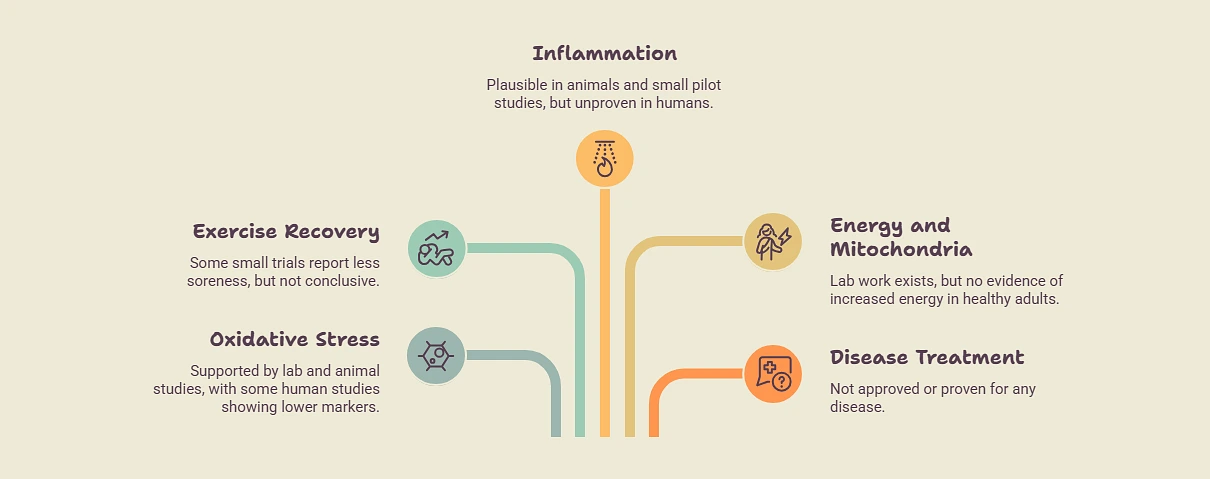
Here’s my honest tally of the claims you’ll see, after a lot of evenings reading abstracts.
- Oxidative stress. The best-supported one. Hydrogen mops up the hydroxyl radical in lab and animal work, and a few small human studies show lower oxidative stress markers after weeks of hydrogen water. Markers, mind you. Not symptoms.
- Exercise recovery. A handful of small trials in athletes report slightly less soreness or lactate. Interesting. Nowhere near settled.
- Inflammation. Mostly animals and tiny pilot studies. Plausible, unproven in people.
- Energy and mitochondria. This is where sellers get loose. There’s lab work on mitochondria. Nothing shows a healthy adult feels more energetic from hydrogen water, apart from testimonials, and I’m one of the people who can’t tell a difference.
- Any named disease. No. Not approved, not proven, and anyone selling a bottle or a machine as a treatment is overstepping.
If you want to see how the big-name bottles stack up against each other on those claims, there’s a separate guide that goes brand by brand on hydrogen water and its therapeutic use, which is the next thing to read before spending anything.
What Breathing HydrOxy Gas Involves And The Real Risks
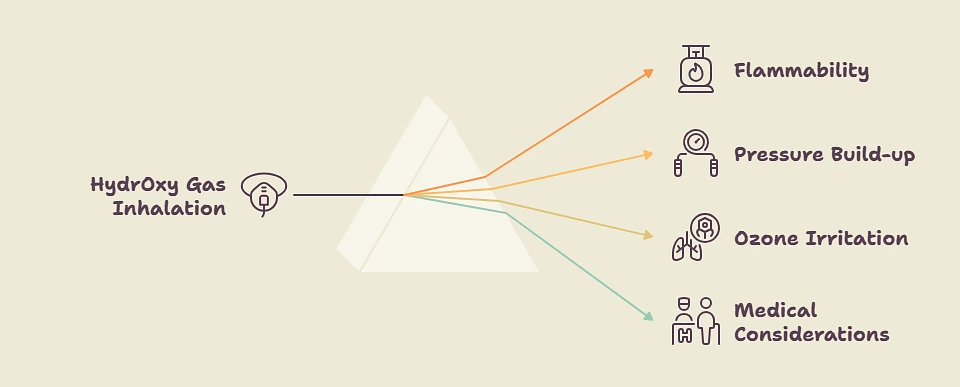
Inhalation machines run a cannula under the nose for 30 to 60 minutes at a time. People who use them say it feels like nothing, which is true; the gas has no smell or taste.
The risks are practical, not medical:
- Hydrogen is flammable, and HydrOxy comes with its own oxygen mixed in. The machine needs flashback protection and proper venting, the room needs airflow, and there should be no flame, cigarette or pilot light anywhere near it.
- Pressure build-up in a sealed system is dangerous. Look for a stated relief design.
- Cells without a membrane can put ozone in the gas stream, which irritates the lungs.
How To Maintain The Device So It Keeps Making Hydrogen
Minerals in water, even filtered water, build up on the electrodes and membrane as scale. Scale cuts the output and eventually wrecks the membrane, and because nothing visible changes, most owners never notice.
- Descale every 2 to 4 weeks, more often with hard water. Citric acid in warm water, run through a cycle, then rinsed.
- Use filtered or purified water in bottles. Distilled conducts too poorly to electrolyze well, and tap water brings chlorine that eats membranes.
- Use deionized or distilled water in inhalation generators if the manual says so.
- Follow the manual on cleaning solutions. Vinegar suits some cells and ruins others.
I descale mine on the first of the month with a teaspoon of citric acid. It takes ten minutes, and the bubbles noticeably pick up afterwards.
Disclaimer: This article is for information only and makes no medical claims. Molecular hydrogen products are not approved to diagnose, treat or prevent any disease. Talk to a doctor before using any inhalation device, especially with a lung condition or during pregnancy.