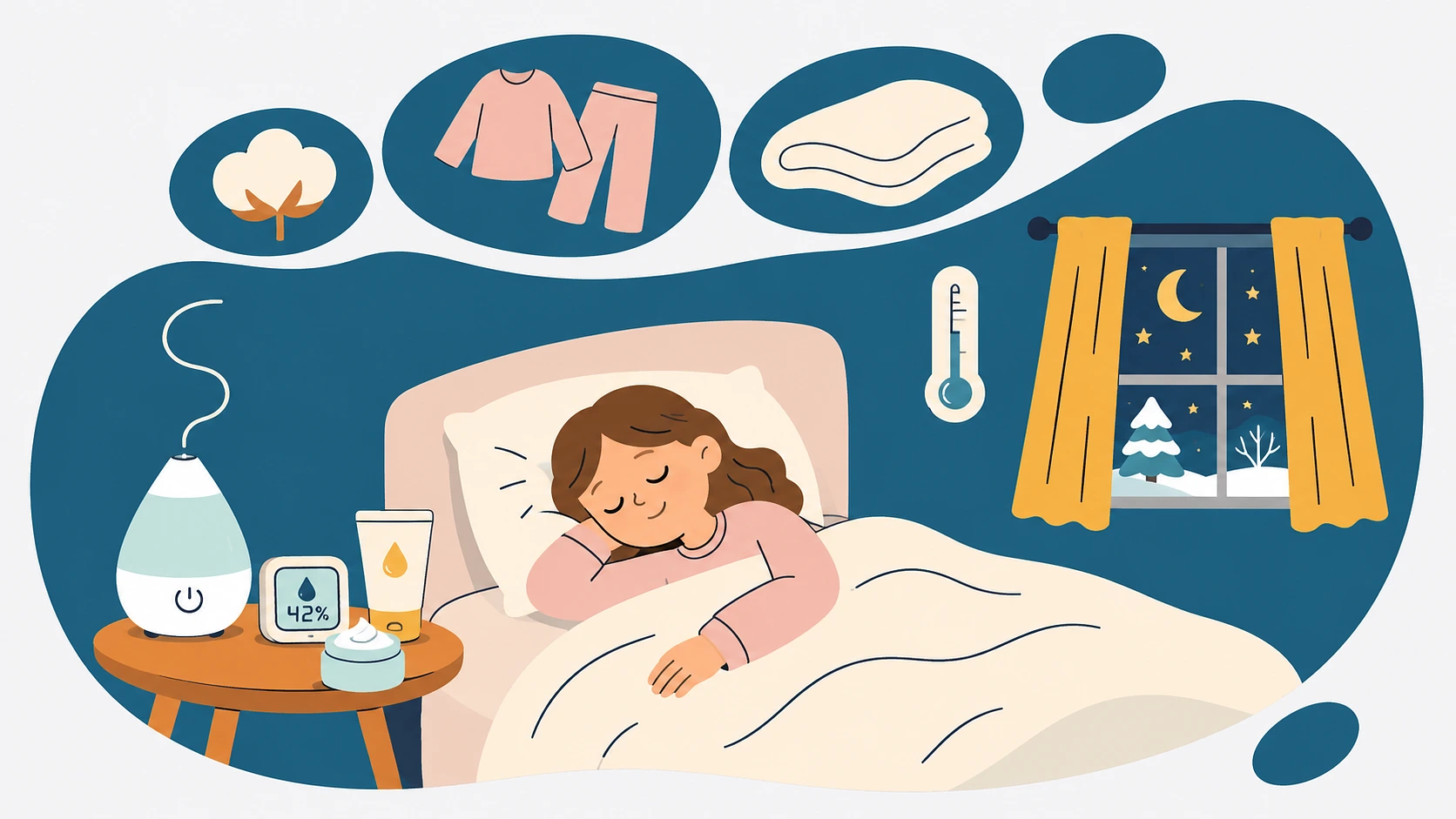
The first week the heat comes on, our house changes. The air gets dry, the windows fog up in the morning, and by bedtime our kids are scratching at their arms and the backs of their knees. Both of them have eczema-prone skin, and for a few years winter nights meant a lot of up-and-down for my wife and me.
I’m Minesh, a dad in Northern California. Over several winters we tried a lot of things in our kids’ bedrooms. Some cost real money and did very little. Others cost almost nothing and became habits we still keep. Here are the five changes that stuck, what each one roughly costs, and where I think you can save your money.
Quick note before we start: none of this replaces your pediatrician or dermatologist. Eczema is a medical condition, and the American Academy of Dermatology points out that most, but not all, kids with eczema lose sleep because of it, and that a dermatologist can build a plan around that AAD. These bedroom changes are about comfort. They sit alongside whatever your child’s doctor recommends.
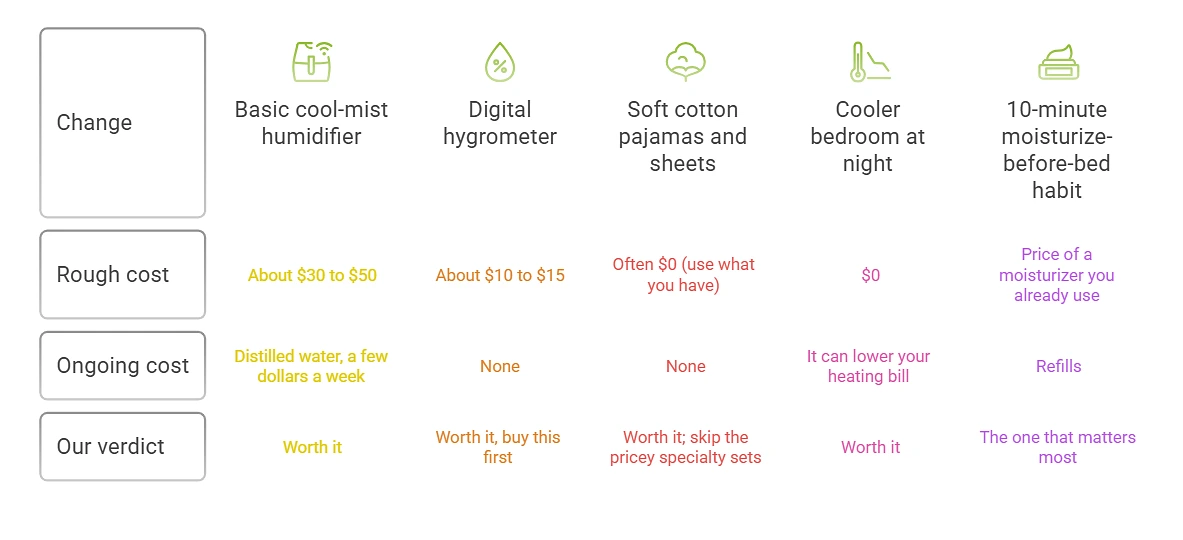
1. A Basic Cool-Mist Humidifier (About $30 to $50)
Indoor heating dries out the air, and dry air is one of the indoor triggers the AAD lists for childhood eczema flares AAD triggers. A humidifier puts some moisture back.
You do not need an expensive smart model. What you need is a tank you can actually get your hand into, because the real work of owning a humidifier is cleaning it. The EPA’s guidance is simple and a little tedious: empty the tank, wipe it dry and refill it every day, and scrub portable units every third day to keep scale and microorganisms from building up EPA. If a model has lots of hidden corners, you will skip cleaning it, and a dirty humidifier is worse than none.
Where people overspend: fancy models with app control. Where people underspend: water. The EPA recommends low-mineral water, such as distilled, so the unit doesn’t send minerals into the air as fine “white dust.” A gallon of distilled water at the grocery store usually costs a dollar or two, and one kid’s room at night goes through a gallon fairly fast. Budget for it.
For kids’ rooms, choose cool mist. The EPA notes that steam vaporizers can cause burns and should be kept out of children’s reach.
2. A $10 Hygrometer (Buy This Before Anything Else)
This is the cheapest item on the list and the one I’d buy first. A hygrometer is a small gauge that shows the humidity in the room. Without one, you’re guessing, and it’s easy to guess wrong in both directions.
The target range is narrower than most people expect. The Consumer Product Safety Commission suggests keeping indoor humidity between 30 and 50 percent CPSC, and the EPA warns against going above 50 percent because damp air can encourage mold and other organisms to grow.
The habit that worked for us: put the hygrometer at kid height on the far side of the room from the humidifier, not right next to it, so you read the room instead of the mist. Check it at bedtime and again in the morning. If the morning number is creeping past 50, or the window is wet, turn the output down. Some nights in a rainy week we didn’t run the humidifier at all.
3. Soft Cotton Pajamas And Sheets (Probably Free)
Here’s where I’ll save you some money. When our kids were little, we looked at specialty eczema pajamas that cost more than the rest of their winter clothes put together.
The research is more modest than the marketing. In the UK CLOTHES trial, 300 children with moderate to severe eczema were randomly assigned to standard care or standard care plus special silk garments for six months. The researchers found no clinically important difference in eczema severity between the two groups Thomas et al., PLoS Medicine, 2017. Some families still love silk for how it feels, and that’s fine. It just isn’t a must-buy.
What the AAD does recommend is loose-fitting clothes made from soft, natural fibers like cotton, a cotton blend, silk or bamboo, and it notes that kids seem less likely to scratch when itchy skin is covered AAD home remedies. For us that meant pulling out the softest, most worn-in cotton pajamas we already owned, cutting out scratchy tags, and choosing long sleeves and long pants in winter. Total cost: nothing.
Same with sheets. Plain cotton sheets that have been washed many times feel softer than new ones. Skip heavy fleece blankets, which brings us to the next change.
4. A Cooler Bedroom At Night ($0, And It Can Save Money)
This one surprised me. We used to crank the heat in the kids’ rooms because we thought warm meant comfortable. But the AAD lists heat and sweat as common eczema triggers AAD triggers, and a kid under a fleece blanket in a warm room is going to get sweaty.
The Sleep Foundation says most doctors recommend a bedroom temperature of about 65 to 68°F for sleep Sleep Foundation. Check with your pediatrician for babies, who have their own safe-sleep rules.
The bonus is your heating bill. The U.S. Department of Energy estimates you can save as much as 10 percent a year on heating and cooling by turning your thermostat back 7 to 10°F for 8 hours a day, for example while you sleep, as the Maryland Energy Administration summarizes Maryland Energy Administration. If you have a heat pump, check your thermostat’s guidance first, since big setbacks can trigger costly backup heat.
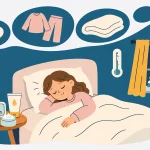
Our version: thermostat down at bedtime, light cotton layers, one breathable blanket, and a quick hand on the back of the neck before we go to bed. If it’s damp, they’re too warm.
The 10-Minute Moisturize-Before-Bed Habit
If you only change one thing, make it this. Humid air helps skin hold onto water, but moisturizer is what keeps it there.
The AAD’s guidance for bath nights is specific: a lukewarm bath, pat dry so the skin is still a little damp, then apply moisturizer within 3 minutes AAD home remedies. On non-bath nights we still do a moisturizer pass before pajamas.
Thicker creams and ointments tend to feel better on dry winter skin than thin lotions. Full disclosure my family makes skin care, so our kids use our own honey-based eczema cream. But any thick moisturizer your doctor is happy with will do the job here. The habit matters more than the brand.
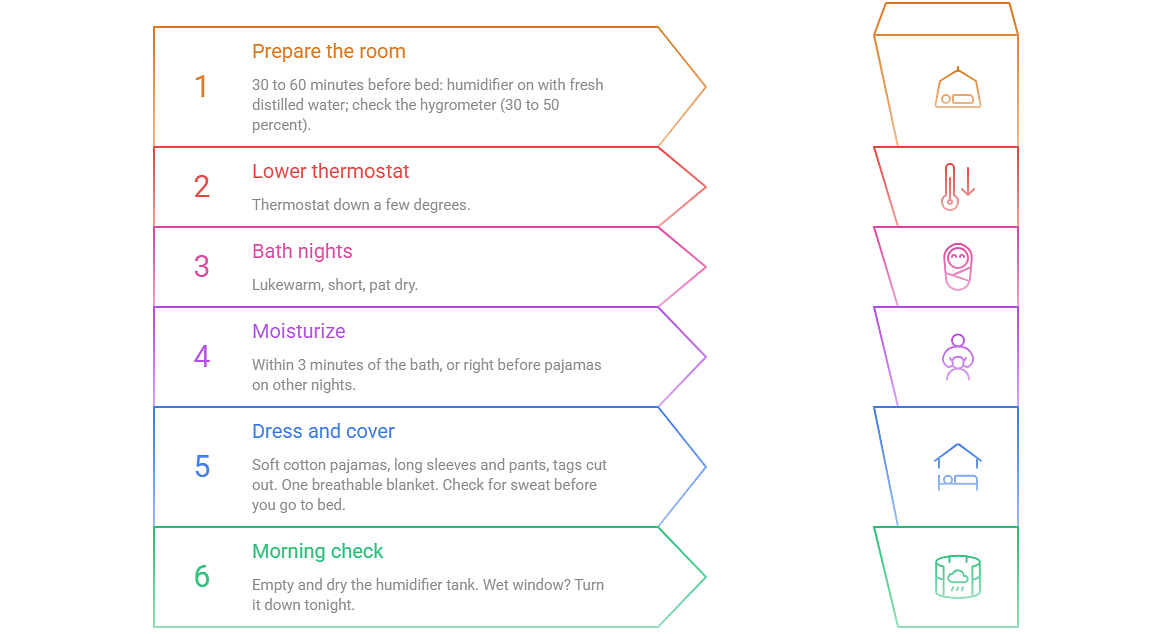
Our Bedtime Reset
This is the routine that lives on a sticky note inside our kids’ closet door:
When To Call The Doctor
Bedroom tweaks have limits. Call your child’s pediatrician or a dermatologist if itching keeps them up most nights, if the skin is oozing, crusting, very painful or looks infected, or if your usual routine just isn’t working anymore. The AAD notes that a dermatologist can address sleep loss directly as part of a plan for your child.
None of these changes are dramatic. Together, they made winter bedtimes in our house noticeably calmer, and they cost far less than we’d been spending on things that didn’t help.
Minesh Patel is a dad of two kids with eczema-prone skin and the founder of Eczema Honey, a family-run skin care company in Northern California. He writes about the everyday, practical side of raising kids with sensitive skin.