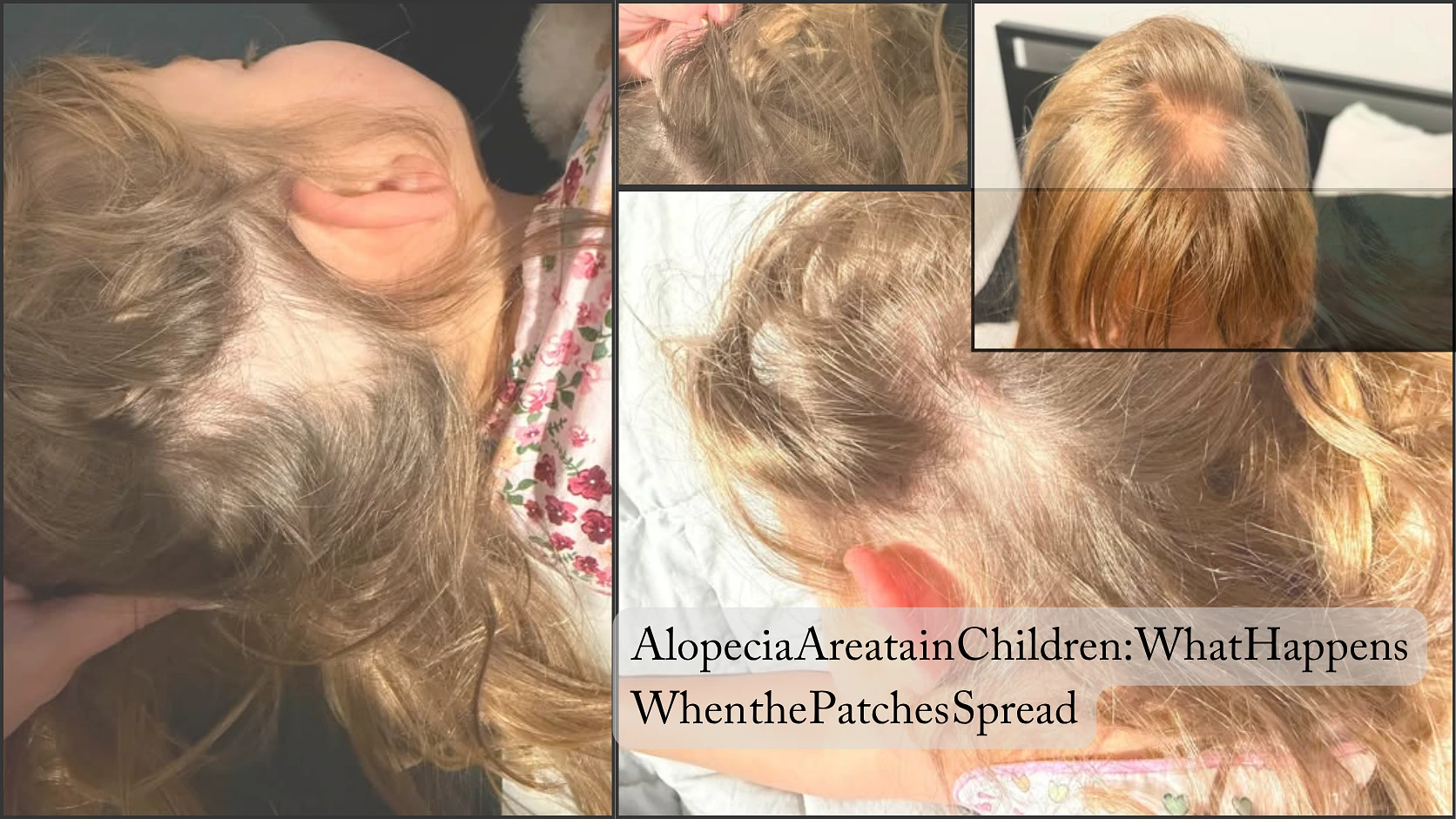
The first patch is usually about the size of a coin. It’s often on the crown, and most parents find it by accident while brushing their child’s hair or tying a ponytail. The doctor says it might grow back on its own, and plenty of times it does.
Most Kids Get A Patch Or Two, And That’s Where It Ends
Alopecia areata happens when the immune system goes after hair follicles by mistake. The bald spots are smooth and round, and the skin looks completely normal. There’s no rash, no flaking, and no scar. Around the edges, a dermatologist might point out tiny broken hairs that narrow toward the root. They’re called exclamation mark hairs, and they’re one of the giveaways.
It tends to show up in school-age kids, usually somewhere between six and twelve. For about nine out of ten children, it stays patchy, with one or two spots that come and go.
The rest aren’t so lucky. The patches join up, the whole scalp goes (alopecia totalis), and in some kids the eyebrows, eyelashes, and body hair follow (alopecia universalis).
Shedding Is The Worst Stretch
Bald is something a kid adapts to faster than adults expect. She picks a hat or doesn’t bother, works out what to say when someone asks, and moves on.
Shedding is another story. There’s hair on the pillow every morning and hair in the bath, and the brush fills up in two strokes. Nobody can tell you when it’ll stop. The doctor can’t, and neither can the internet. You just watch.
Parents get worn down by this too, and they usually hide it from the kid, which is fair, but tell someone.
Cutting long hair short helps a surprising amount, since a few short hairs on a pillow don’t look like much. As for school, let your child call it. Some want a beanie and zero questions. Some would rather tell the class themselves before anyone else gets the chance. Either way, give the teacher a heads-up.
Creams Come First
Most dermatologists start with a strong steroid cream or ointment on the patches. A common one is clobetasol propionate 0.05%, which is sold under different brand names depending on the country (Dermovate is one of them). It’s about as strong as steroid creams get, and yes, that feels like a lot for a seven-year-old. Trials in children have found it works better than mild hydrocortisone, though.
It can thin the skin if it’s used too long, so stick to the schedule the doctor gives you.
When The Eyelashes Go, Doctors Usually Switch To Tablets
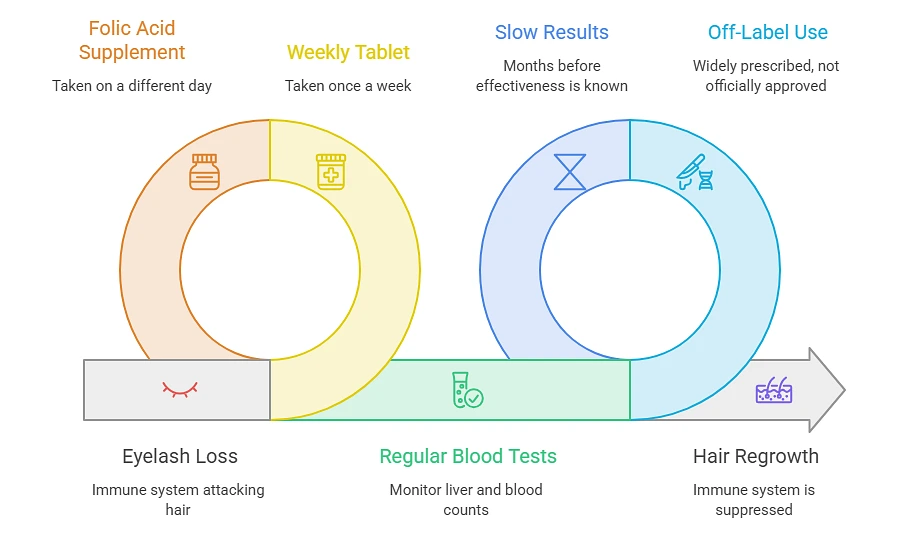
Losing eyelashes or eyebrows tells the doctor the problem isn’t staying on the scalp. At that point, many move children onto methotrexate, a tablet that dials the immune system down.
Here’s what comes with it:
- It’s taken once a week, not every day, and usually with folic acid on a different day.
- Blood tests happen regularly to check the liver and blood counts.
- It’s used off-label for alopecia in kids, so it’s widely prescribed but not officially approved for this.
- It’s slow, and you’re looking at months before you know if it’s working.
The evidence behind it is thinner than you’d hope. Doctors still aren’t sure whether methotrexate or another drug, cyclosporine, should come first for children. Studies comparing the two only started recently, and these medicines have been around for decades.
What About The Newer JAK Pills?
There’s a newer group of tablets called JAK inhibitors. One of them, ritlecitinib (Litfulo), is approved for severe alopecia areata, but only from age twelve. Under twelve, no tablet is officially approved for this condition yet. Trials in younger kids have started, so it’s worth asking about again as your child gets older.
Winter Tends To Bring New Patches
Lots of families notice the same thing. The hair grows back over summer, and then new spots turn up once the weather gets cold. Studies that tracked children’s flares found winter and autumn come out slightly ahead of spring and summer. It’s not a huge difference, but it keeps showing up.
One theory is vitamin D, since kids get less sun in the darker months. Nobody has proven that yet. It’s still reasonable to ask the dermatologist about a vitamin D blood test, or about starting treatment before winter instead of waiting for the first new patch. For kids who also have allergies, some doctors have suggested antihistamines during the bad months.
Can The Hair Grow Back?
Yes, and fully. The follicles aren’t destroyed. They’re still alive under the skin, which is how a child who lost almost everything can have long hair again a year or two later.
That’s the good news. The bad news is the same fact from the other side live follicles can be attacked again, and there’s no cure. Nothing yet has been shown to keep kids clear once they stop treatment.
Every case runs its own way. It’s the most annoying thing a doctor can say to a worried parent, and unfortunately, it’s also true. Your child’s dermatologist knows the details of your child’s case, and this article doesn’t, so bring your questions to them.