

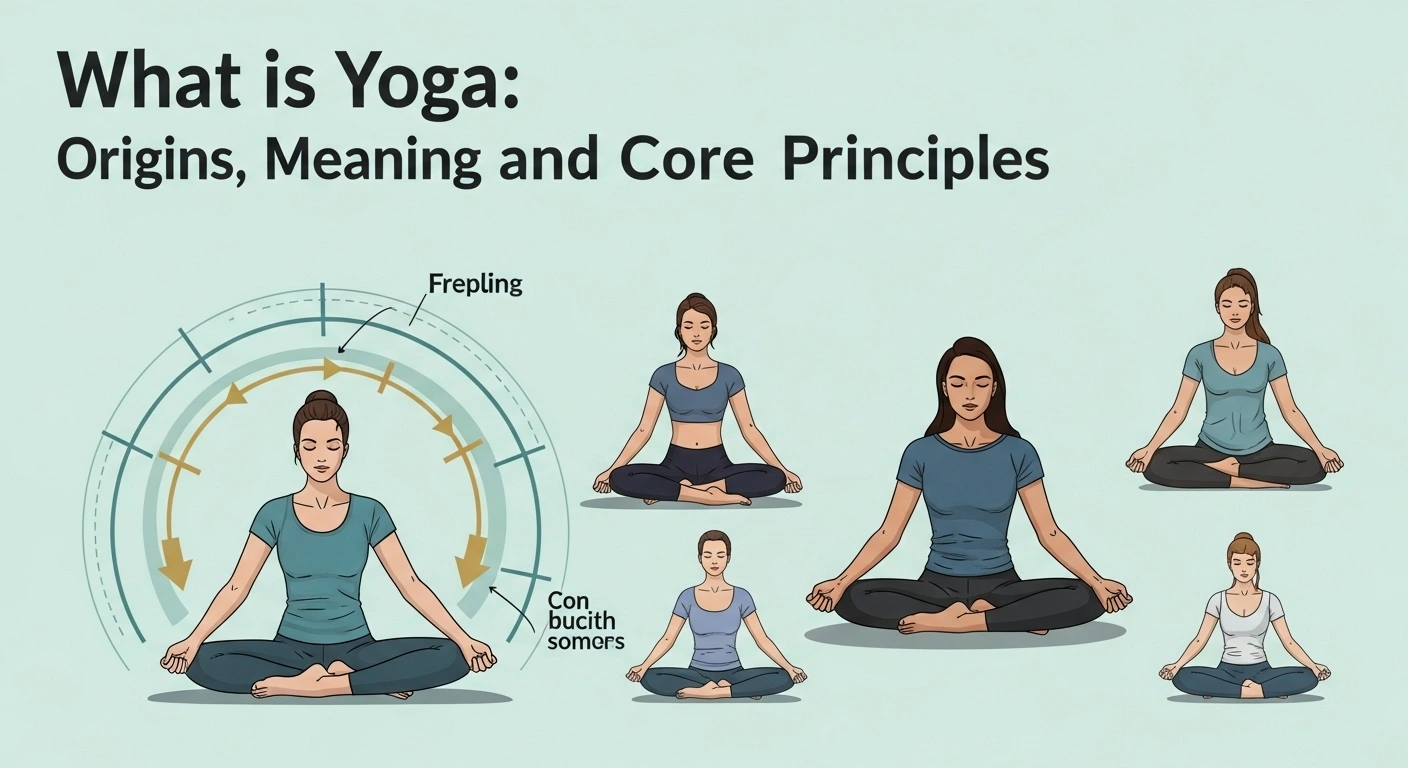
Finding a yoga definition can be difficult due to the fact that yoga is defined in terms of virtually anything, from a type of physical activity to a spiritual practice. But, in reality, yoga is very simple it is a series of practices which enable individuals to connect their body, breath and attention. This connection can be created through the use of movement, breathing techniques, mindfulness and relaxation.
- A practical definition of yoga will center around integration; in other words, bringing your body, breath and mind together.
- The use of yoga postures is simply one of the tools available, not the entire practice.
- Research shows that yoga and yogic breathing can help some individuals with their levels of stress and physical functioning, however, results vary.
- You don’t have to be flexible to start practicing yoga. There is no need to purchase specialized equipment to begin.
What is yoga?
Yoga originates from ancient South Asian traditions which evolved over time. In addition to the postures commonly taught today, the tradition of yoga has always included breath practices, meditation and developing one’s ability to pay attention. The aim of yoga is not to “perform” perfectly-shaped postures. Rather, the objective is to develop awareness and balance so that one can carry these qualities into everyday life.
In the majority of health and wellness programs, the most common definition of yoga is “a mind-body practice.” This definition is important since it reminds you that yoga is not only a physical practice, but that it also involves being aware of what you experience during practice and how you react to discomfort.
If you would like to use a definition as a base-line to compare different yoga styles and/or class descriptions, then this definition can serve as a helpful reference.
What are the main elements of a yoga practice?
Most practices will involve some combination of:
- Postures (asana): movements and shapes that promote range of motion, strength, balance and body awareness.
- Breath Practices (pranayama): specific breathing techniques; these should be introduced gradually and with caution.
- Focus and Mindfulness: being attentive and deliberate in order to create a steady anchor for the mind.
- Rest: conscious stillness used to aid in recovery and reduce the body’s stress response.
- A full definition of yoga allows for more than “doing postures correctly.”
What are the physical benefits of yoga?
Some of the physical changes that people may experience as a result of regularly practicing yoga include:
- greater ease of movement and less stiffness.
- stronger muscle groups that provide structural support.
- improved balance and coordination.
- greater awareness of when one is engaging in excessive activity.
There is some research suggesting that yoga based exercises may benefit some individuals with chronic low back pain and that these exercises may improve functional mobility in older adults.
What are the mental and emotional benefits of yoga?
A number of people seek out information related to yoga in order to find more stability and calm in their lives. Individuals typically describe themselves as feeling more centered and capable of recognizing signs of stress earlier after practicing yoga.
Breathing appears to be a key element in creating this sense of calm. Some research indicates that yogic breathing techniques may benefit some individuals in certain areas, however, the technique used does make a difference. For example, if you tend to become dizzy or panicked while attempting to control your breathing, please continue to breathe naturally and comfortably, and avoid forced breathing techniques.
It is also worth noting that yoga is not a substitute for mental health services. Therefore, if you are experiencing symptoms of depression, trauma, panic attacks or substance use, yoga may be a beneficial component of your overall recovery process, but ideally, yoga would be practiced in conjunction with proper professional assistance.
Common myths about yoga
“I’m not flexible enough.” Flexibility is not a prerequisite for starting yoga. A realistic definition of yoga encompasses practicing where you are physically and emotionally.
“Yoga is only for certain body types.” Yoga can be adapted using props such as blocks, chairs, walls and smaller ranges of motion.
“If yoga is not challenging enough, then it’s not worth doing.” Gentle and Restorative yoga “count,” particularly for regulating stress.
“Yoga should eliminate all of my stress.” While yoga may assist individuals in changing how they respond to stress, it cannot eliminate all of the stress present in your life.
What are the main types of yoga?
Some of the more common styles of yoga include:
- Hatha: slow-paced; ideal for beginners and learning the fundamentals.
- Vinyasa / Flow: linking movement with breath; the level of challenge can vary greatly.
- Yin: longer holds; slow paced.
- Restorative: supported postures; designed for rest and relaxation.
- Chair yoga: accessible practice using a chair for stability.
Trying various classes is one way to broaden your definition of yoga beyond one particular style or image.
How to get started with yoga
When you’re beginning, try to keep things relaxed:
- begin with 10–20 minute practices, 2–3 times per week
- try beginner, gentle, restorative or chair yoga classes first
- utilize props (pads, straps, a belt, a wall) as soon as possible
- focus on steady breathing and not deep stretching
Practicing consistently, even if for a short amount of time, can be more effective than avoiding practice altogether.
Is yoga safe for everyone?
For the vast majority of individuals, yoga is relatively safe. However, it should be modified to suit your body and your past health experiences. You may want to seek additional guidance if you’ve had a recent injury, chronic pain conditions (such as fibromyalgia), osteoporosis, significant joint instability or hypermobility, dizziness, or if you are pregnant or postpartum.
General Safety Guidelines:
- sharp pain is a signal to stop immediately
- numbness or tingling requires a reset
- you are likely pushing yourself too far if you can’t breathe smoothly
FAQs
Is yoga only stretching?
Stretching is only a portion of what yoga can include. A more comprehensive definition of yoga includes breathing and developing awareness, not only increasing flexibility.
How frequently should I practice yoga?
Begin by establishing a routine that you can maintain. Most people begin with 1–3 sessions of yoga per week.
Can yoga replace therapy or medical treatment?
No. While yoga can enhance your overall well-being, it is not a substitute for receiving treatment when you are struggling.
What happens if my mind refuses to settle?
This is typical. Yoga is the practice of returning, again and again.
Hope for Your Journey
A compassionate definition of yoga will allow for the realities of everyday life. There are days when yoga is about movement and strength. There are days when it is simply taking a few deep breaths prior to going to sleep. Either way, both can be meaningful.
Take small steps, remain honest with yourself and allow yoga to be a space to practice listening rather than trying to force.
Request a consultation
A consultation can be a calm first step if you want help sorting through support options and next steps.
If you or someone you love is in crisis, call your local emergency number right away. In the U.S., you can call or text 988 for the Suicide & Crisis Lifeline. If you’re outside the U.S., look for your country’s crisis line or go to the nearest emergency department.
This post was contributed by Earl Wagner, a content strategist who specializes in developing data-driven content strategies. His work with organizations in the mental health sector helps increase awareness about resources for both teens and adults.
Reference:
- Ozge Karanlik, Zeynep Duru, Ahmet Avci, Eylem Tutun Yumin. (2025). Fibromyalgia Syndrome and Yoga. International journal of yoga.
- Ying Li, Lei Yan, Lingyu Hou, Xiaoya Zhang, Hanping Zhao, Chengkun Yan, Xianhuang Li, Yuanhe Li, Xiaoan Chen, Xiaorong Ding. (2023). Exercise intervention for patients with chronic low back pain: a systematic review and network meta-analysis. Frontiers in public health.
- Julia Loewenthal, Kim E Innes, Margalit Mitzner, Carol Mita, Ariela R Orkaby. (2023). Effect of Yoga on Frailty in Older Adults : A Systematic Review. Annals of internal medicine.
- Ranil Jayawardena, Priyanga Ranasinghe, Himansa Ranawaka, Nishadi Gamage, Dilshani Dissanayake, Anoop Misra. (2020). Exploring the Therapeutic Benefits of Pranayama (Yogic Breathing): A Systematic Review. International journal of yoga.