The Takeaway
I spent a year assuming I needed a bigger system to fix my morning more structure, more apps, more discipline. What actually worked was smaller and dumber than anything I’d tried: a $12 timer and a rule that I couldn’t touch my phone until it rang.
If you’ve lost the external structure that used to run your mornings for you, you probably don’t need a more complicated system either. You need one small, boring constraint you can’t argue your way around.
For four years, my mornings were built for me. A coach’s whistle, a practice schedule, a team relying on me to show up at 6 a.m. whether I felt like it or not. When I stopped competing, nobody told me the hardest part wouldn’t be missing the sport. It would be mornings with no structure at all.
The Morning I Realized I Had a Problem
Eight months after my last season, I was running two content businesses from my kitchen table, and I still hadn’t figured out how to start a day without someone else building it for me.
My mornings looked like this wake up, check email, get pulled into whatever felt urgent, look up, and it’s 11 a.m. and I hadn’t done a single thing I’d actually planned to do. I tried to-do lists. I tried waking up earlier. Neither worked, because the problem wasn’t time. It was that nothing was forcing me to start.
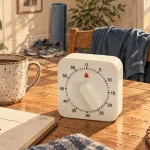
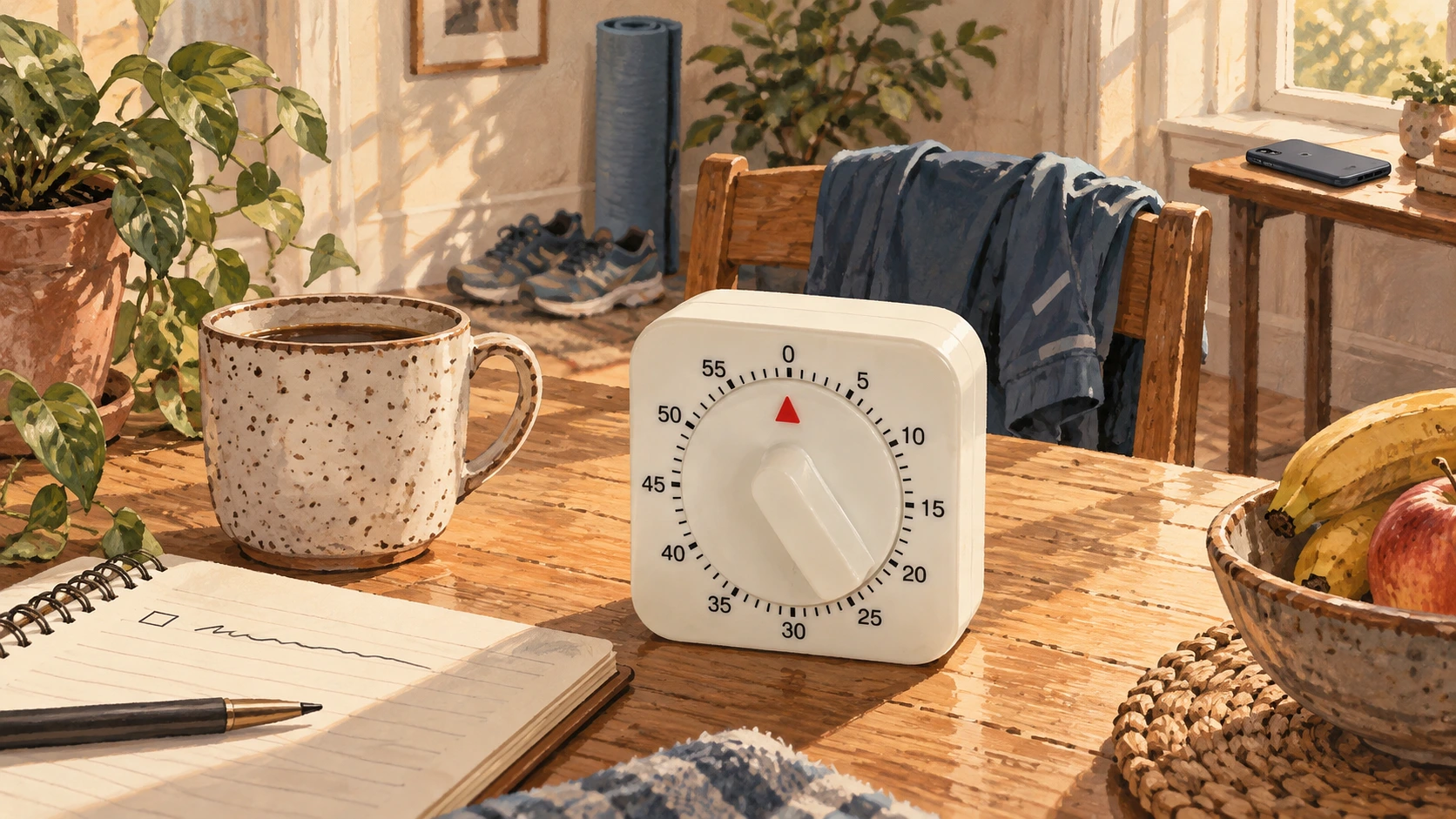
Then I bought a $12 mechanical kitchen timer the twist-dial kind, not an app and it fixed more of my mornings than any productivity system I’d tried in the previous year.
Why a Cheap Timer Worked Where Apps Didn’t
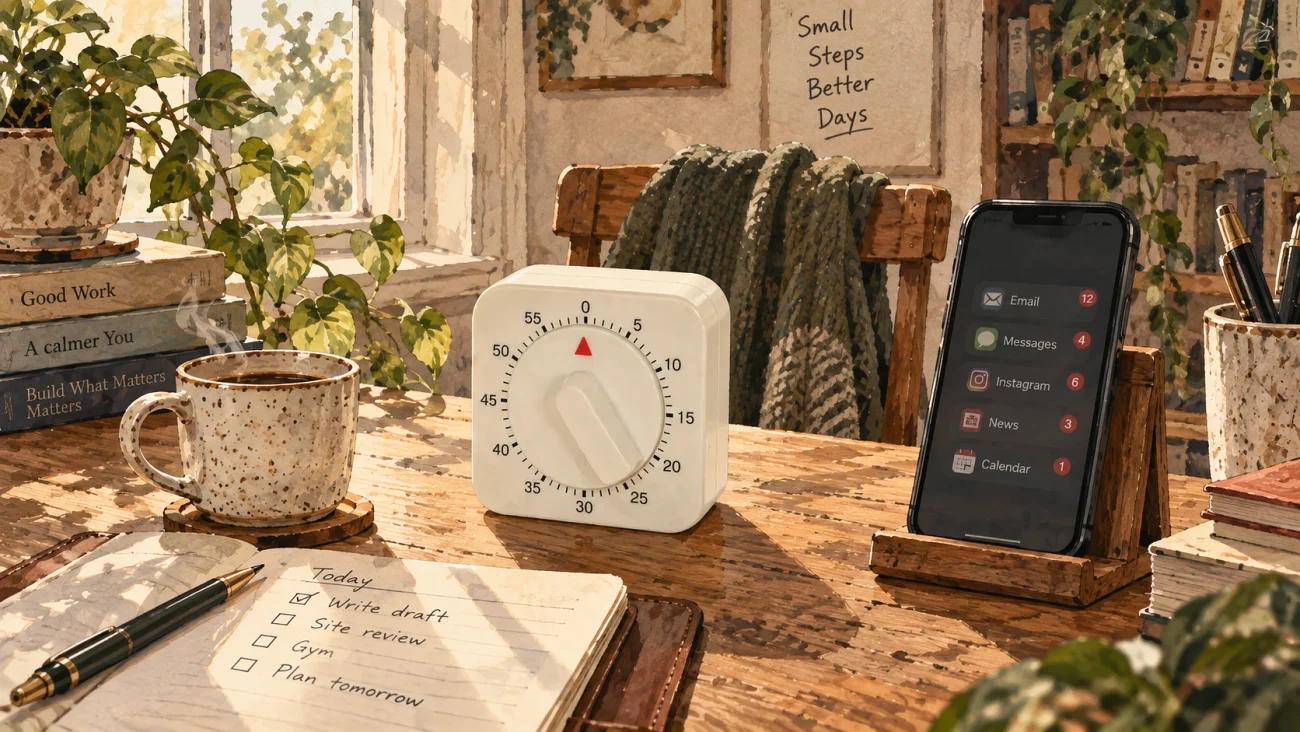
I’d already tried phone-based timers and focus apps. They didn’t stick, and I think I know why: my phone is also where the distractions live. Opening a timer app put me one swipe away from email.
The physical timer removed that option entirely.
Here’s the actual routine I built around it:
- 6:30 a.m. – Twist the dial to 20 minutes. No phone in the room.
- First 20 minutes – One task only, decided the night before. Usually the thing I was most likely to avoid.
- When the bell rings – I’m allowed to check email, but not before.
That’s the entire system. No app, no dashboard, no streak to maintain. Just a bell that goes off when the 20 minutes are up.
“The habit that pulled me out of a lost year wasn’t a five-step morning routine. It was one 20-minute block I couldn’t negotiate my way out of.”
What Changed After Six Months
I’ve used this same timer nearly every weekday for about six months now. A few concrete things shifted:
I stopped negotiating with myself before 7 a.m. When athletics ended, so did the external accountability that used to make decisions for me. The timer became a stand-in for that structure not a coach, but close enough that I stopped debating whether to start.
My most-avoided tasks got done first, not last. Writing an editorial calendar, drafting a hard email, reviewing a site redesign the stuff I used to push to 4 p.m. and then abandon now happens in the first 20 minutes, before I have the chance to talk myself out of it.
I needed fewer decisions to get moving. Research on habit formation backs this up: routines that remove decision points at the start of a task make it far more likely the task actually gets started, because willpower is spent on decisions, not just effort James Clear on habit stacking.
Why This Might Work for You Too
You don’t need to have been an athlete to lose your morning structure. Anyone coming out of a rigid schedule a corporate job, a school semester, even a demanding caregiving stretch can end up with the same problem: plenty of time, no forcing function.
If that’s you, here’s what I’d actually try:
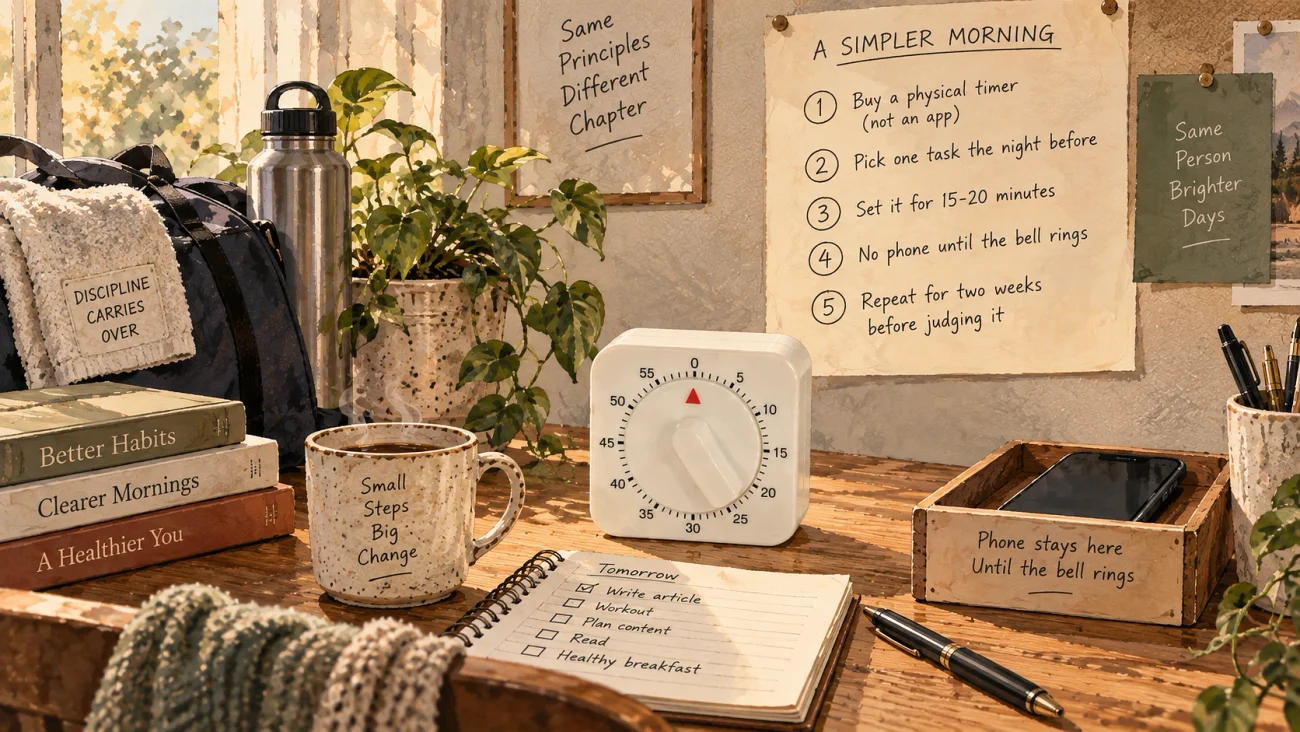
- Buy a physical timer, not an app. The separation from your phone is the entire point.
- Pick one task the night before. Deciding in the morning is where most people lose momentum.
- Set it for 15–20 minutes. Short enough that starting doesn’t feel like a commitment.
- No phone until the bell rings. This is the rule that does most of the work.
- Repeat for two weeks before judging it. The first few mornings will feel arbitrary. By week two, the bell itself starts to feel like permission to begin.