Here’s a confession from someone who color codes her pantry and meal-preps like a professional until last year, I could not have told you what oil was in my car. Not the brand, not the type, nothing. The car was the one corner of my life running entirely on autopilot, a machine I fed petrol and hoped for the best, and I suspect I’m not alone, because most of us who optimize everything from our morning routines to our grocery lists treat the car as somebody else’s department.
Then my brother-in-law, a mechanic with strong opinions and infinite patience, pointed out that I was ignoring one of the easiest money-and-waste hacks hiding in my life admin. It takes ten seconds at service time, costs nothing extra, and quietly pays out in fuel, fewer errands, and less waste for years. The hack is embarrassingly simple know what oil your car’s manual asks for, and actually use it, which for a huge share of modern cars means an oil called 5W30. Here’s the two-minute education that turned me from oblivious to mildly insufferable about it.
The Ten-Second Decoder
Those numbers on the bottle aren’t a brand name, they’re a two-part rating, and reading them is the whole trick.
The 5W is the cold score, W for winter, and the lower it is, the faster the oil flows on a cold morning. The 30 is how the oil behaves once the engine is fully warm. So 5W30 is an oil with two personalities thin and quick when your car first wakes up, steady and protective once it’s running. That first personality matters more than you’d guess, because most engine wear happens in the first moments after a cold start, while the oil is still trave to where it’s needed. Thin oil arrives fast. Thick oil, on a cold morning, moves like honey from the fridge, and your engine waits.
That’s the entire mechanical education required. Everything below is just what it means for your money, your time, and your footprint.
The Life-Hack Math: What One Right Choice Pays

I love a hack where a single decision keeps paying without any further effort, and this is a textbook case. Three payouts, all real, all modest, all automatic:
- A little fuel, forever. Thinner oil means the engine wastes less energy pumping its own lubricant, which is partly why manufacturers recommend grades like 5W30 in the first place. The honest size of the saving is small, a percent or two versus running a heavier oil than your car needs, invisible on one tank and real across years of driving.
- Fewer errands. Most 5W30 today is synthetic, and synthetic oil holds up much longer than the old-school stuff, which means longer stretches between oil changes. Fewer Saturday mornings at the service center is a lifestyle upgrade nobody talks about.
- A car that lasts. Better cold-start protection means less wear, and less wear means the car you own keeps being the car you own. In a world nudging everyone toward replacing everything constantly, keeping a machine alive longer is quietly one of the most sustainable things a household does.
The Slow-Living Angle That’s Actually True
Green claims around car products are usually 90 percent glitter, so let me hand you the honest version, because it holds up and it fits how a lot of us are trying to live anyway.
The most concrete environmental win isn’t at the tailpipe, it’s in the drain pan. Every oil change produces several liters of used oil, genuinely nasty stuff that has to be collected and processed, and a synthetic 5W30 running longer intervals simply generates fewer of those liters per year of driving. Pair that with the longevity point, a well-lubricated engine outliving a neglected one and postponing the enormous footprint of manufacturing a replacement car, and you get an eco case built out of boring arithmetic instead of leafy packaging. No bottle of oil saves the planet, but less waste and longer-lived things is the whole slow-living playbook, applied to the one possession most of us forget to include in it.
How to Actually Do This (Five Minutes, Once)

The full life hack, start to finish, for people like recent me who have never opened the glove box manual:
- Open the manual and find the oil grade. It’s in the specifications or maintenance section, one line, something like 5W30 or 0W20. That number is the answer, engineered for your exact engine, and it outranks every article including this one.
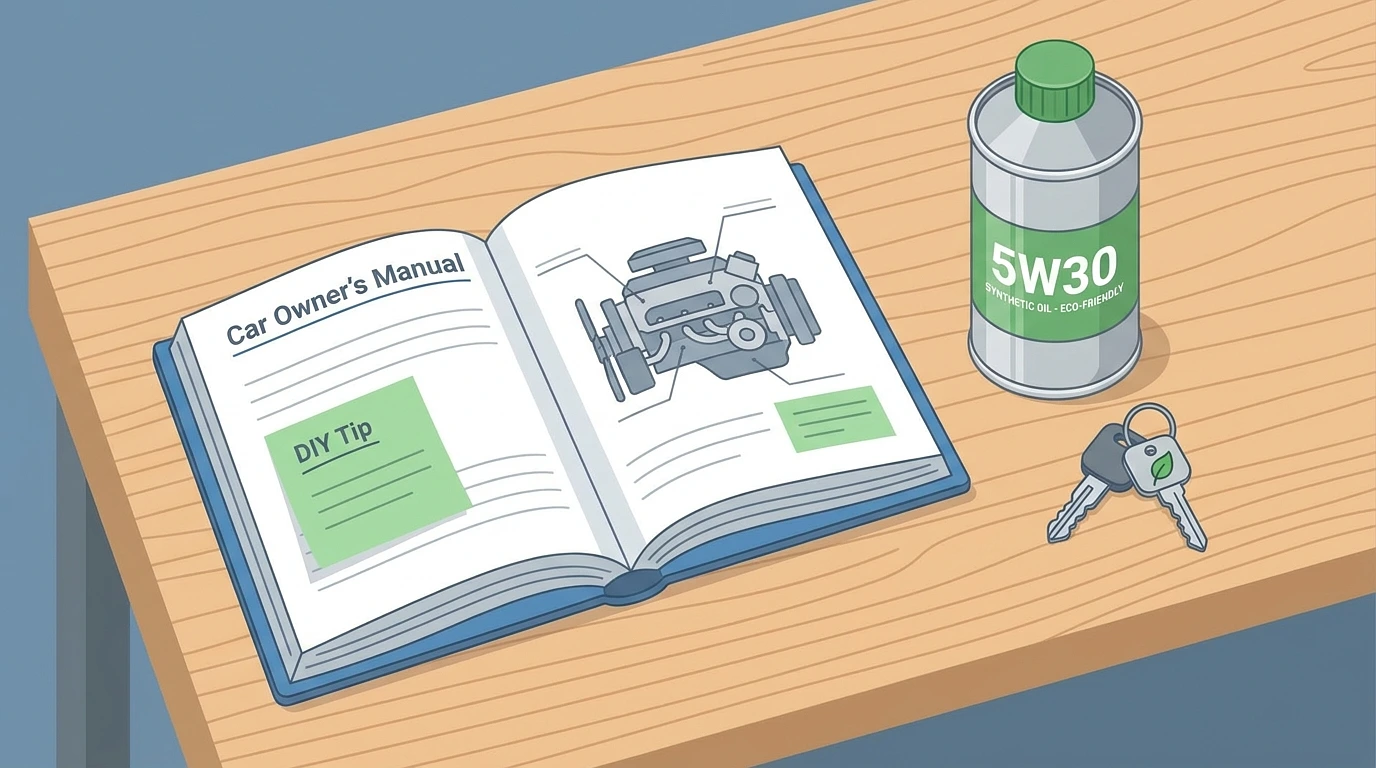
- If it says 5W30 and you’ve been running whatever the last garage poured, then switching to 5W 30 engine oil at your next service is the whole move. Say the grade when you book, or grab the bottle yourself if you’re the DIY type.
- If it says something else, follow that instead. Newer cars increasingly ask for even thinner 0W20, and some older engines genuinely want heavier oil. The hack was never “5W30 for everyone,” it’s “the manual’s grade for you,” and 5W30 just happens to be the manual’s answer for an enormous number of cars on the road.
- One honest exception: a high-mileage engine that already leaks or burns oil sometimes does worse on a thinner grade. If that’s your situation, it’s a quick chat with a mechanic before switching, not a leap of faith.
The Part I Didn’t Expect
The strangest outcome of this whole thing wasn’t the fuel math or the smug feeling at the service desk, though both arrived on schedule. It was that knowing one real thing about my car changed my relationship with it. The machine stopped being a mysterious expense generator and became another system in my life I actually understand, like the pantry, like the budget, and understood systems get maintained instead of neglected. My brother-in-law says half his repair jobs trace back to owners who never opened the manual, and I believe him, because I was three pages away from being one of them.
So that’s the hack, filed honestly at its true size. One glove box, one line in a manual, ten seconds at your next service, and a small stack of quiet payoffs, in fuel, in errands, in waste, in the lifespan of the most expensive thing most of us own after the roof over our heads. The future of greener driving is being built out of exactly these unglamorous choices, and this one is sitting in your glove box right now, waiting to be read.