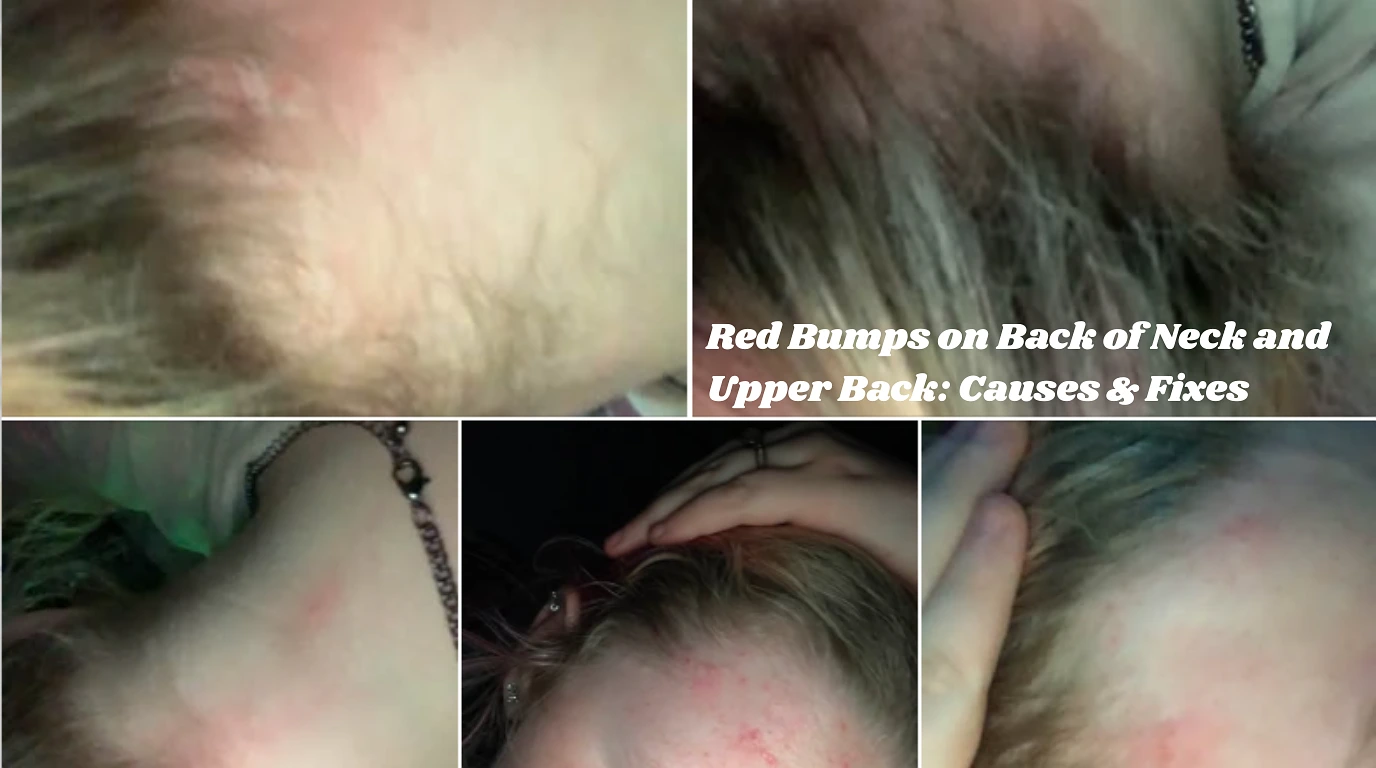
Abstract: Small red bumps along the hairline, nape of the neck and upper back are usually caused by one of a handful of everyday skin problems: folliculitis, contact dermatitis from jewellery or hair products, heat rash, keratosis pilaris, or ordinary acne. Telling them apart comes down to pattern, texture and timing, and most cases clear within two weeks once the trigger is removed. This article explains how each condition behaves, answers the questions people actually ask about them, and covers the warning signs that mean a doctor should look instead.
The back of the neck gets a rough deal. Hair drags across it all day, chains and collars sit on it, sweat pools under it in summer, and every drop of shampoo you rinse out runs straight over it. So when a patch of red bumps turns up there, or spreads down toward the shoulder, the honest answer is that half a dozen things could be responsible and they all look fairly similar at first glance.
That similarity is exactly why so many people end up confused after searching their symptoms. One site says acne, another says allergy, a third says fungal infection. The pattern of the bumps sorts most of it out, though, and that pattern is something you can read yourself.
Start With the Follicles
If the bumps sit right along the hairline or in hairy skin, folliculitis should be your first thought. Each hair grows from a small pocket, and when a pocket gets inflamed it swells into a red or pink bump, occasionally topped with a tiny white head.
Why the nape specifically? Friction, mostly. Hair rubbing skin, hoodie seams, backpack straps, the edge of a car headrest. Add sweat, add a neckline trim or a shave with a slightly tired razor, and bacteria have an easy way in. It’s such a common presentation that dermatologists sometimes call these “acne-like breakouts” even though the mechanism is different, and the American Academy of Dermatology keeps a whole guide on it for exactly that reason.
Mild folliculitis mostly fixes itself. Keep the area clean and dry, wash after sweating, leave the necklace in the drawer for a fortnight, and resist picking. A wash with benzoyl peroxide helps some people along.
Does folliculitis spread from person to person? Usually no. The everyday friction-and-sweat type isn't contagious. The exception is when a specific bug is driving it, such as staph bacteria from a poorly maintained hot tub, which is its own well known variant. If several people in your household broke out at the same time after using the same tub or pool, mention that to your doctor because it changes the picture.
Why does mine keep coming back in the same spot? Recurring crops in one area often mean the trigger is still there, or that a yeast called Malassezia is involved rather than bacteria. Malassezia folliculitis is stubborn, tends to itch more, and shrugs off the usual acne washes. It needs antifungal treatment, which is prescription territory in most cases.
The Necklace Question
Now look at the shape of the rash rather than the individual bumps. Does it trace a line? Does it sit exactly where a chain rests, or where your collar touches?
A rash that follows the path of something touching your skin is the signature of contact dermatitis, and on the neck the list of candidates is short and predictable. Cheap jewellery leads it. Nickel allergy affects a surprisingly large slice of the population, women more than men because of earlier and heavier jewellery exposure, and most budget chains contain nickel somewhere in the alloy.
Hair products come second. Shampoo, conditioner and styling sprays all end up on the neck and upper back whether you put them there or not. Fragrances and preservatives are the usual irritants. Laundry detergent trapped in collars and pillowcases rounds off the common causes, and yes, your pillowcase touches this exact patch of skin for eight hours a night.
The fix is boring but effective: remove one suspect at a time and wait. Take the chain off for two weeks before you change the shampoo, not at the same time, otherwise you learn nothing about which one it was. A thin layer of 1% hydrocortisone cream twice a day settles the itch while you wait. If nothing changes after you’ve cycled through the obvious suspects, ask about patch testing. It’s the definitive way to identify a contact allergy and MedlinePlus has a plain-language overview of how contact dermatitis gets diagnosed.
Can I just switch to “hypoallergenic” jewellery? Sort of. The word isn’t regulated, so it guarantees nothing. What you actually want is stated metal content: surgical stainless steel (316L), titanium, niobium, or solid gold of 14k and above. “Nickel-free” plating wears off; solid metals don’t.
Heat, Sweat and Plain Rubbing
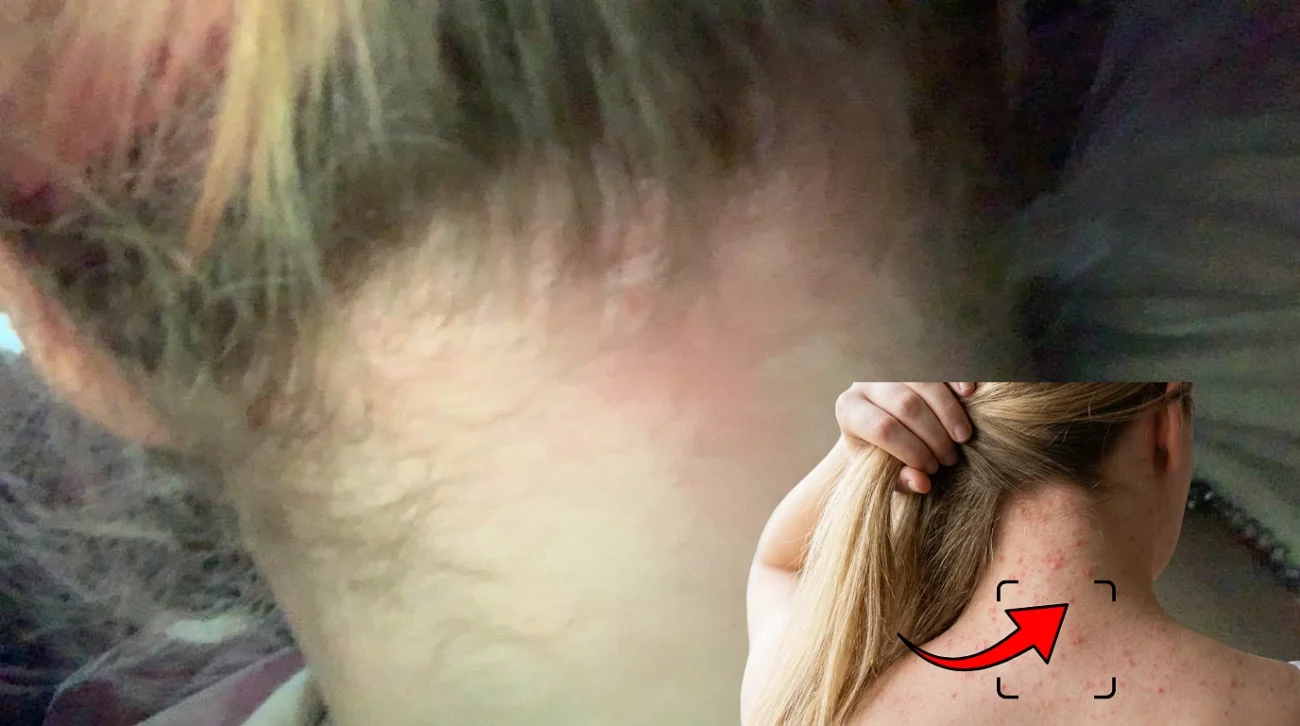
Some bumps have nothing to do with allergy or infection at all. Heat rash happens when sweat ducts block up and sweat leaks into the surrounding skin, producing crops of tiny red bumps that prickle or sting. Skin that stays warm and covered gets it worst, which puts the neck under long hair, the skin beneath bra straps, and the mid upper back squarely in the firing line.
Friction irritation looks nearly identical and comes from mechanical rubbing alone. Rough clothing tags, straps, seat headrests, even sleeping face down on a coarse pillowcase night after night.
Both settle fast once air gets to the skin. Hair up in hot weather, looser layers, cooler showers. There’s not much more to it than that, and if it doesn’t settle fast, it probably wasn’t heat rash in the first place.
The Bumps That Were Always There
Run your fingers over the affected skin. If it feels rough and dry, like very fine sandpaper, and it’s felt that way for as long as you can remember rather than appearing last month, you may be looking at keratosis pilaris. A protein called keratin plugs the follicle openings and produces small skin-coloured or pinkish bumps, classically on the upper arms but often on the upper back and sometimes the neck.
It runs in families, it isn’t itchy or sore in most people, and it’s completely harmless. Nobody needs to treat it. Plenty of people want to anyway for cosmetic reasons, and moisturisers with urea, lactic acid or salicylic acid genuinely do smooth the texture with regular use. The NHS page on keratosis pilaris sets sensible expectations: it can be improved, not cured, and it often fades on its own with age.
How do I tell keratosis pilaris from acne? Texture and behaviour. KP is uniform, dry, rough and stable over months. Acne is mixed (whiteheads, blackheads, deeper red spots), individual spots come and go, and it favours oilier skin zones.
So Could It Just Be Acne?
It could. Acne on the back, shoulders and neck is common and runs on the same engine as facial acne: oil, dead skin cells and bacteria, aggravated by sweat, friction and hair products. If you already break out on your face and the neck spots look and act the same way, acne is a fair explanation, and a salicylic acid or benzoyl peroxide wash a few times weekly is the standard opening move.
Here’s the catch, and it’s the reason “it’s probably just acne” left you unconvinced in the first place. Acne prefers oily zones. Bumps confined to the hairline at the back of the neck, especially with nothing much happening on the face or chest, point more toward folliculitis or irritation than acne. Location is evidence.
Narrowing It Down Without a Medical Degree
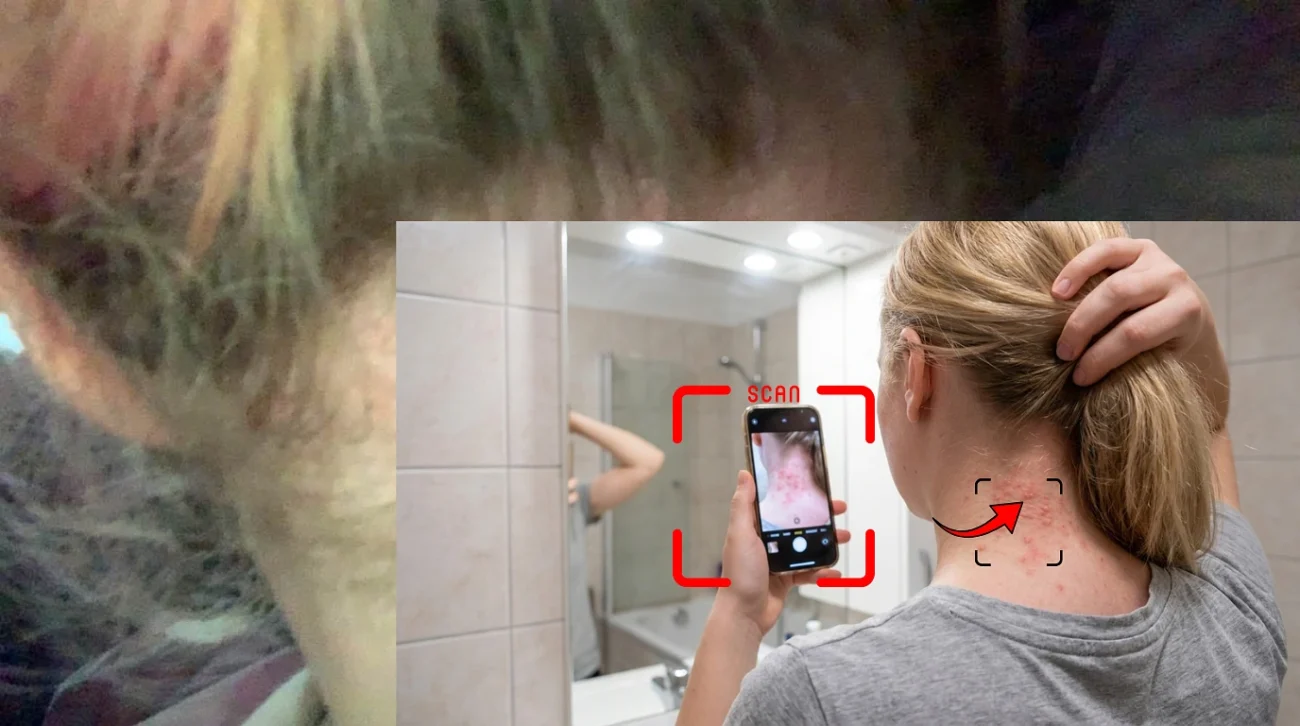
A week of paying attention tells you more than an hour of searching. Work through this:
- Map it. Photograph the area in good light every couple of days. Does the rash follow a chain, a collar line, a strap? Is it spreading or static?
- Date it. New shampoo? New necklace? New detergent? A heatwave? Started at the gym recently? The trigger usually entered your life shortly before the bumps did.
- Touch it. Rough and dry leans keratosis pilaris. Tender with white heads leans folliculitis. Itchy redness in one defined shape leans contact dermatitis.
- Change one thing at a time, two weeks per change. This is slower than swapping everything at once and it is the only version that identifies the cause.
- Hands off. Scratching and squeezing break the skincare and invite the infection you were trying to avoid.
How long should I try home treatment before seeing someone? Two to three weeks is a reasonable ceiling for a mild, stable rash. Spreading, pain, heat, swelling, pus, or fever shortens that to “book the appointment now.”
When Guessing Stops Being Sensible
Most of what’s covered here is minor. Some situations aren’t, and the line is fairly clear. See a GP or dermatologist if the bumps are multiplying or moving into new areas, if any spot turns painful, hot or pus-filled, if you develop fever alongside the rash, if itching is wrecking your sleep, or if three weeks of sensible trigger removal has changed nothing.
There’s a quieter reason to go too. Skin diagnosis from photos and descriptions is genuinely unreliable, even for professionals, and a handful of less common conditions imitate the everyday ones well: fungal infections, scalp conditions creeping down past the hairline, inflammatory skin disease that needs prescription treatment. An in-person look takes a clinician seconds. Many practices now offer teledermatology as a middle path, where you send clear photos and get a specialist opinion within days instead of waiting weeks for a slot.
Will the doctor need to do tests? Usually not. Most of these conditions are diagnosed on sight. Occasionally a quick swab or skin scraping confirms a bacterial or fungal cause, and patch testing gets booked if contact allergy is suspected. None of it is invasive.
None of the above replaces an examination by someone qualified who can actually see and touch the skin in question. If a rash worries you, that instinct alone is a good enough reason to get it checked.