Key Takeaway
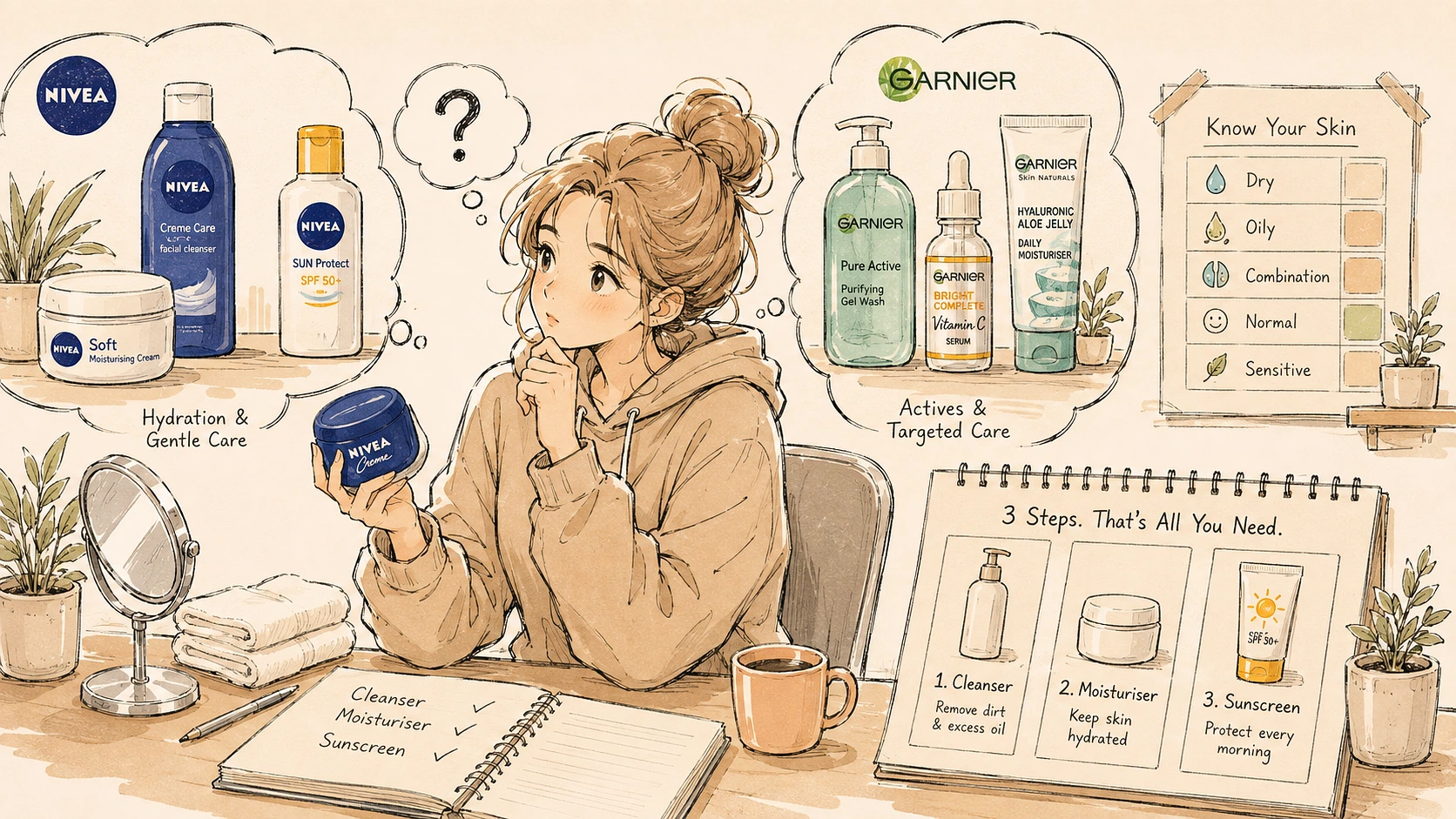
Both are fine. Nivea is the safer first purchase if your skin is dry, sensitive or you have no idea what your skin type is. Garnier is better if your skin is oily or breaking out, because it sells the active ingredients that help with those.
But the brand matters far less than the three products you buy, and neither brand makes the one product that will do the most for your Skincare. More on that below.
What Each Brand Is Actually Good At

The two companies are not really competing for the same job.
Nivea has spent a century selling moisturisers. The formulas are short, heavy on glycerin and panthenol, and built to hydrate without doing anything clever. There are fewer products, which sounds like a limitation and is actually helpful when you know nothing yet.
Garnier sells actives. Vitamin C, salicylic acid, niacinamide, hyaluronic acid, packaged for people who have a specific complaint and want it addressed. More choice, more decisions, more ways to get it wrong.
Brand comparison at a glance:
| Nivea | Garnier | |
|---|---|---|
| Main focus | Hydration and barrier support | Targeted actives |
| Typical texture | Rich, creamy, occlusive | Light, gel-based, fast-absorbing |
| Best for | Dry, sensitive, normal skin | Oily, combination, acne-prone |
| Range size | Small and simple | Large and varied |
| Risk of irritation | Low | Moderate, depends on product |
| Learning curve | Almost none | You need to read labels |
| Weakest area | Little for acne or oil control | Heavy hydration for very dry skin |
Pick By Your Skin, Not By The Brand
This is the part that actually decides your answer, and it takes thirty seconds.
Wash your face with a plain cleanser, wait an hour, then touch your skin without applying anything.
Working out your skin type:
| What you feel after an hour | Skin type | Better starting brand |
|---|---|---|
| Tight, rough, maybe flaking | Dry | Nivea |
| Shiny across forehead, nose and chin | Oily | Garnier |
| Shiny in the middle, tight on cheeks | Combination | Either, or one product from each |
| Comfortable, no shine, no tightness | Normal | Nivea for simplicity |
| Stinging, redness, easily irritated | Sensitive | Nivea, and patch test everything |
If you genuinely cannot tell, start with Nivea. Gentle products on skin that did not need gentle products cost you nothing. Active products on skin that cannot handle them cost you a fortnight of irritation.
You Only Need Three Products
Not ten. Not a seven-step routine. Three.
A cleanser, a moisturiser, and sunscreen. That is a complete routine, and dermatologists have been saying so for years while the internet says otherwise.
A beginner routine from either brand:
| Step | When | What it does | Where to buy it |
|---|---|---|---|
| Cleanser | Morning and night | Removes oil, sweat, sunscreen | Nivea if dry or sensitive, Garnier if oily |
| Moisturiser | Morning and night | Keeps the barrier hydrated | Nivea, in most cases |
| Sunscreen | Every morning | The single most effective anti-ageing step | Either, but a dedicated SPF 30+ |
Two honest notes on this table.
Mixing brands is completely fine. A Garnier salicylic acid cleanser with a Nivea moisturiser is a genuinely sensible combination for oily skin that still needs hydration. Nothing is loyal to anything.
Do not rely on a moisturiser with SPF in it. Most people apply nowhere near enough moisturiser to get the protection printed on the label. Buy a separate sunscreen.
What Neither Brand Will Tell You
Sunscreen matters more than anything else you buy. More than the vitamin C serum, more than whichever cleanser you agonised over.
That is the actual answer to “which brand should I start with”, and it is why the brand question is slightly the wrong one. If you buy Nivea’s entire range and skip sunscreen, you will get worse results than someone using a basic supermarket moisturiser and applying SPF every morning.
Neither company will lead with that, because sunscreen is the least exciting thing they sell.
The Mistakes That Actually Cost Beginners
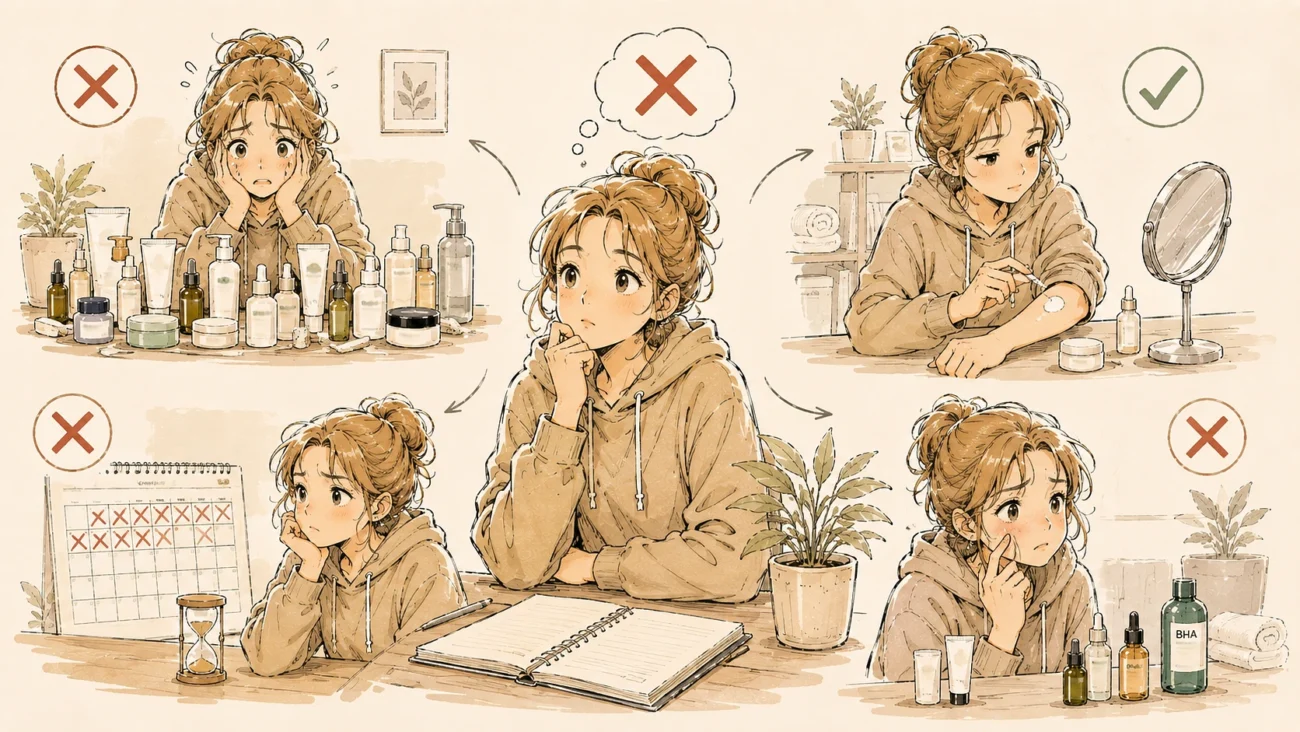
Buying too much at once:
If you introduce five products in a week and your face reacts, you have no way of knowing which one did it. Add one new product every two weeks. Boring, and it works.
Skipping the patch test:
Put a small amount on your inner forearm or jawline for two days before it goes near your whole face. This one habit prevents most of the disaster stories.
Expecting results in a week:
Skin renews on its own schedule. Give any product six to eight weeks before deciding. Anything promising visible change in three days is selling to you.
Using actives too aggressively:
Salicylic acid every day on skin that has never met an exfoliant will not give you clear skin faster. It will give you a damaged barrier, which looks worse than what you started with.
Common beginner mistakes and what to do instead:
| Mistake | What happens | Do this instead |
|---|---|---|
| Five new products at once | No idea what caused a reaction | One new product every two weeks |
| No patch test | Whole-face reaction | Test on jawline for two days |
| Judging after one week | Quitting things that were working | Wait six to eight weeks |
| Daily strong actives from day one | Damaged barrier, more irritation | Two or three times a week to start |
| Skipping sunscreen | Undoing everything else you do | SPF 30+ every morning, all year |
| Scrubbing an active spot | A mark that lasts months | Leave it alone |
When A Drugstore Brand Is Not Enough
Both brands are perfectly capable of maintaining healthy skin. Neither is a treatment.
See a dermatologist if your spots are deep and painful, if they are leaving marks or scars, if things are getting worse across months of trying different products, or if you have persistent redness or flaking that no moisturiser touches. Those are medical, and a cleanser will not fix them.
So, Which One

If you are dry, sensitive, or unsure, start with Nivea. Cleanser, moisturiser, sunscreen, nothing else for two months.
If you are oily or breaking out, start with Garnier for the cleanser and consider one active, plus a moisturiser from either brand and a separate sunscreen.
Then leave it alone and be consistent. A basic routine used every day for three months beats an expensive one used sporadically, and both of these brands are good enough to get you there.
Disclaimer: General information only. If you have a persistent skin concern, see a qualified dermatologist.