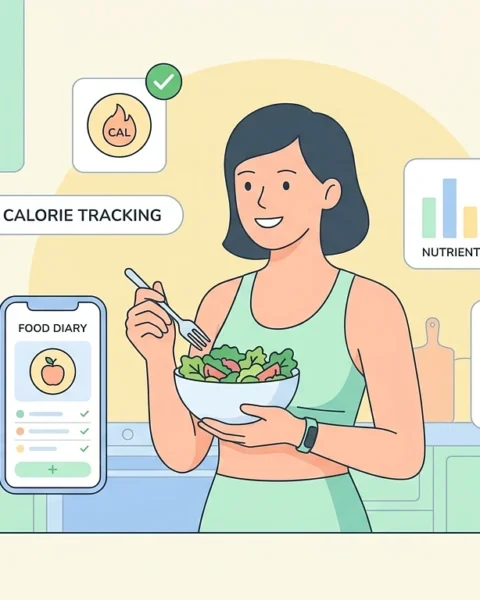
Count calories long enough and you notice something the tracker cannot explain. Two women eat the same 1,600 calories. One feels steady and sleeps well. The other is exhausted by three in the afternoon, ravenous by nine at night, and gaining weight around the middle she swears she never had at thirty. The math is identical. The bodies are not, because a calorie tells you how much energy went in, and it tells you nothing about the hormones that decide what the body does with it.
That is the whole case for this approach. For women magazine especially, the interesting levers are not the size of the meal but its effect on insulin, cortisol, estrogen, and the muscle that quietly runs your metabolism. Get those right and the calorie question mostly takes care of itself. Chase calories alone and you can do everything “right” while your hormones work against you.
One caution before anything else, because this topic is swimming in it. “Balancing your hormones” has become a marketing phrase attached to teas, supplements, and rigid rules that mostly do not survive contact with evidence. Real hormonal conditions exist and deserve real diagnosis. What follows is the boring, defensible version, and a clear note on where the popular version oversells.
Blood Sugar Is The Lever That Moves The Others
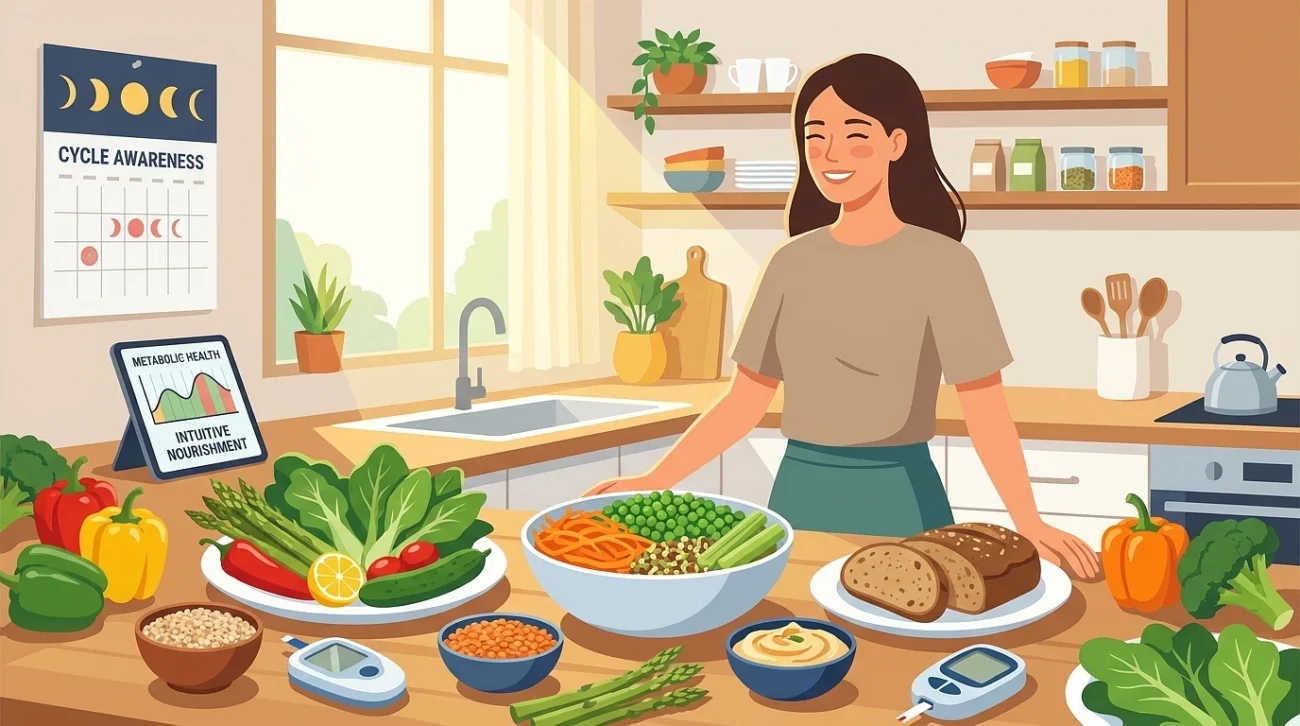
If you change one thing, change how steady your blood sugar stays across a day, because insulin sits upstream of a lot.
Every time you eat fast-digesting carbohydrate on its own, a plain pastry, juice, white bread at a hungry moment, glucose spikes and insulin surges to clear it. Do that repeatedly and the crash that follows drives the exact cravings and afternoon energy collapse that get blamed on willpower. Stable blood sugar helps regulate insulin, cortisol, and estrogen together, which is why it earns top billing.
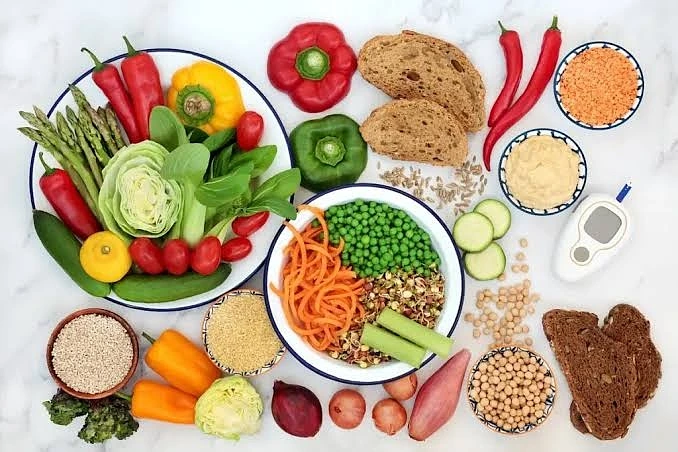
The fix is not cutting carbs. It is refusing to eat them naked. Pair carbohydrate with protein, fiber, and fat, all of which slow glucose absorption and flatten the spike. A slice of toast becomes toast with eggs. Fruit gets a handful of nuts alongside it. The meal is the same size. Its hormonal signature is completely different.
Protein does double duty here. Beyond blunting the glucose curve, it is the raw material for muscle, and muscle is where this whole story eventually leads.
The Cortisol Trap That Dieting Makes Worse
Cortisol is the stress hormone, and it responds to more than a bad day at work. Chronic under-eating and relentless exercise both read to the body as stress, which is the cruel irony sitting inside most aggressive diet plans. A woman slashes calories, adds daily hard workouts, and drives cortisol up precisely when she is trying to lean out. Elevated cortisol encourages the body to hold fat, disrupts sleep, and can knock the menstrual cycle off rhythm.
Sleep belongs in this same paragraph because the two feed each other. Short or broken sleep raises next-day cortisol, worsens insulin sensitivity, and reliably increases appetite the following day. You cannot out-discipline a sleep debt. The plan has to protect rest as seriously as it protects any meal.
Working With Your Cycle Without The Pseudoscience
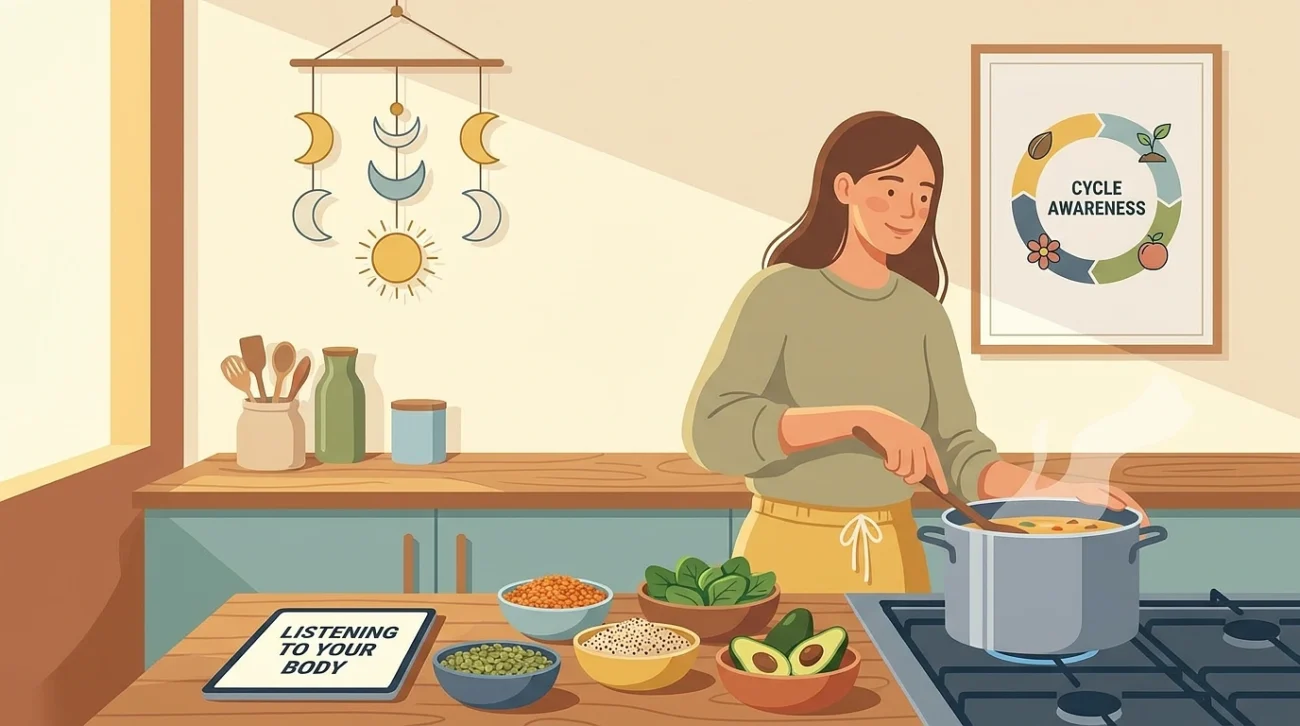
Here is where I have to split the room, because there is a real signal buried under a lot of noise.
The real part: hormones genuinely shift across the menstrual cycle, and so does the body’s behavior. In the luteal phase, the roughly two weeks before your period, studies show women eat meaningfully more, with one review putting the increase somewhere between about 159 and 529 extra calories a day, alongside stronger cravings and a small rise in calorie burn. That is not weakness. Your body is running a different program.
The oversold part: the internet’s version of “cycle syncing,” with strict rules about which foods and workouts are permitted in each phase, and the trend of seed cycling, rotating flax and pumpkin then sesame and sunflower seeds to “balance” estrogen and progesterone. The evidence for the rigid protocols is thin. Reviews of seed cycling find the claims either unsupported or resting on small, low-quality studies, and dietitians point out the seeds are worth eating simply because they are nutrition, not because the calendar makes them hormonally magic.
A saner frame, and the one the better clinicians actually recommend, is cycle awareness rather than cycle syncing:
- Luteal phase (before your period): expect more appetite and stock the kitchen for it. Meet the cravings with nutrient-dense food instead of trying to white-knuckle through them. Restriction here usually backfires into a binge.
- Menstruation: emphasize iron-rich foods like lentils, dark leafy greens, and lean red meat to replace what bleeding takes, especially if you run tired.
- Follicular and ovulation: energy and appetite often dip and mood lifts, a natural window for harder training and making each bite count.
No rules to memorize. Just paying attention and responding kindly, which is both more evidence-based and far more sustainable than a chart telling you flaxseed is forbidden on day 17.
Perimenopause Changes The Assignment
Somewhere in the forties, sometimes earlier, the rules quietly rewrite themselves, and a lot of women spend years blaming their willpower for what is actually endocrinology.
As estrogen declines through perimenopause, its metabolic protection goes with it. Insulin resistance tends to rise, fat starts collecting around the abdomen as visceral fat rather than the hips, and muscle becomes harder to keep. That last point is the quiet emergency. Women lose lean muscle at a rate of roughly one percent a year starting in their thirties, and the decline steepens after fifty. Less muscle means a lower resting metabolism, which means the eating-and-exercise pattern that held your body steady at 35 simply stops working at 48. Nothing went wrong with you. The assignment changed.
The response that the current research keeps landing on is not more cardio and fewer calorie intake, which accelerates muscle loss and cranks cortisol. It is the near opposite:
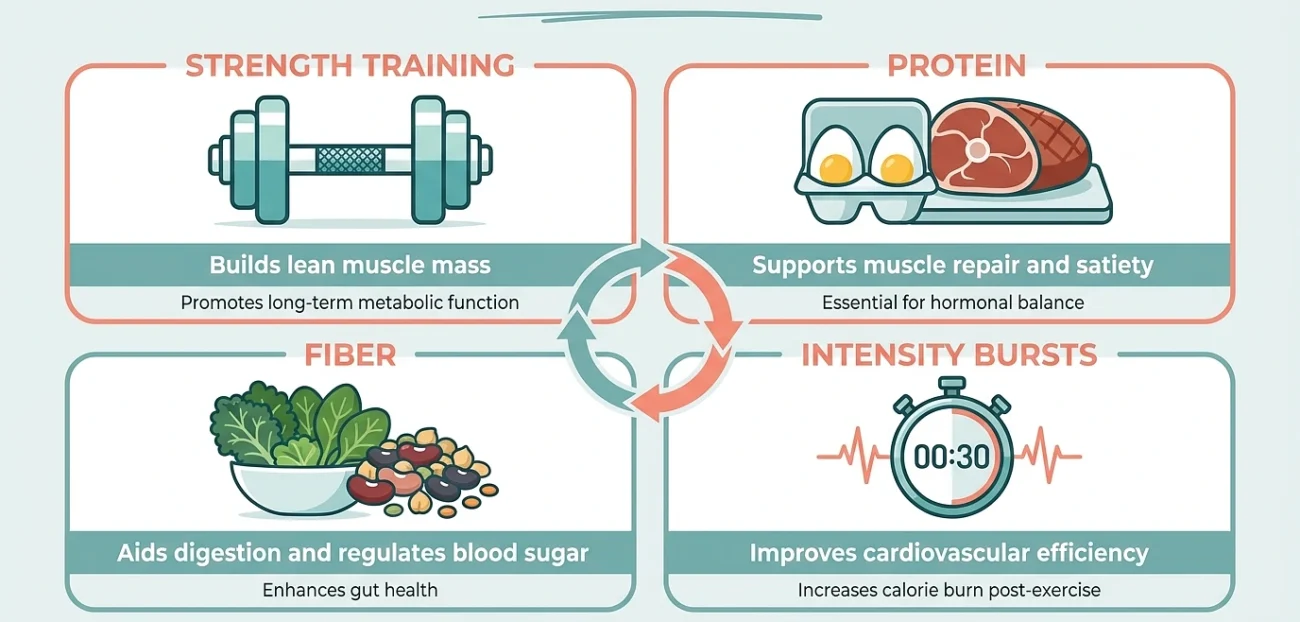
- Strength training becomes non-negotiable, because it is the one reliable signal that tells an aging body to keep the muscle it would otherwise shed.
- Protein intake rises in importance, both to support that muscle and to steady blood sugar. Older women appear to need at least the standard baseline and likely more, spread across meals rather than dumped into one.
- Fiber does real metabolic work, around 25 grams a day as a common target, or closer to 21 for women over 50, helping insulin sensitivity and satiety at once.
- Short bursts of intensity such as brief intervals can improve insulin sensitivity efficiently, though they are best periodized with easier weeks, since perimenopausal cortisol is already prone to running high.
What “Balance Your Hormones”
Strip away the marketing and the phrase has an honest meaning. It does not mean a cleanse or a supplement stack. It means the unglamorous foundations, done consistently: steady blood sugar, enough protein, real strength work, protected sleep, and stress that gets managed rather than ignored. Those are the inputs that keep insulin, cortisol, and the sex hormones behaving, at every life stage.
It also means knowing the border of self-help. Persistent irregular cycles, severe fatigue, unexplained weight change, and the classic signs of PCOS or thyroid trouble are medical questions, not blog questions. Genuine hormonal disorders need testing and a clinician, and any product promising to fix them from a jar deserves your suspicion.
Where To Actually Begin
You do not implement all of this on a Monday. Pick the lever with the most leverage and start there.
For most women that is blood sugar, because it is the easiest to change and it quietly improves cortisol, cravings, and energy in the same move. Stop eating carbohydrates alone. Put protein at breakfast so the day does not start on a glucose rollercoaster. Guard your sleep like it is part of the plan, because it is. Add resistance training before you add another cardio session. And drop the calorie app for a while, not because energy balance is fake, but because it was measuring the wrong thing, and watching a number all day is its own small stressor.
The scale was never the enemy, and neither was food. The plan just works better when it is built around the chemistry that decides what your body does with a meal, rather than the arithmetic that only counts it going in.